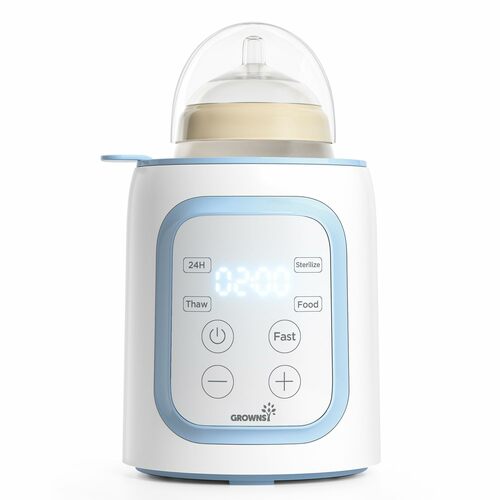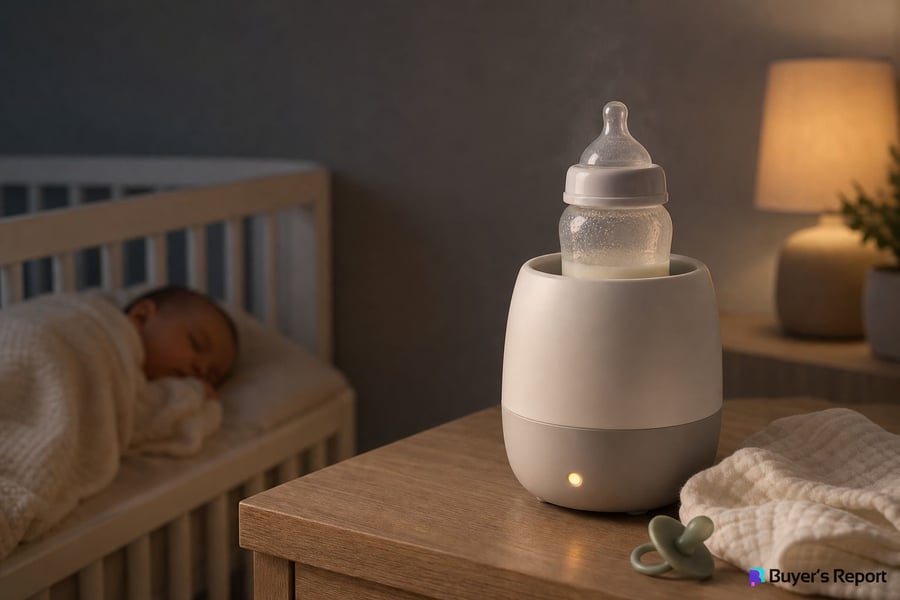
Warming a bottle for a hungry infant sounds simple enough, but get the temperature wrong — too hot or unevenly heated — and you risk burning your baby's mouth or destroying the nutrients you worked hard to pump and store. A good bottle warmer takes that guesswork off your plate, delivering consistently warm milk without the unpredictability of running a bottle under hot tap water or, worse, the microwave. This guide walks you through the heating methods, compatibility considerations, and safety features that matter most, so you can find the right warmer for your feeding routine — whether that's a countertop unit in the nursery or a cordless solution for travel.
Who Should Consider a Bottle Warmer?
A bottle warmer isn't a must-have for every family — babies can safely drink cold or room-temperature formula or breast milk, and many do so happily. But for parents who prefer to serve warmed bottles, a dedicated warmer quickly becomes one of the most-used items in the nursery. If any of the situations below sound familiar, it's worth adding one to your list.
- Exclusively pumping parents: If you're feeding stored breast milk, temperature precision matters more than almost any other feature. Overheating breast milk above 104°F (40°C) can degrade beneficial antibodies, enzymes, and nutrients, so a warmer with a reliable temperature ceiling is essential.
- Night-feeding parents: Fumbling with a pot of water at 3 a.m. is exhausting and inconsistent. A warmer with a fast cycle and auto shut-off lets you heat a bottle with minimal effort and zero supervision.
- Parents of multiples: If you're feeding two babies at once, look for dual-bottle capacity — single-bottle warmers will quickly become a bottleneck.
- Travel-heavy families: Frequent flyers, road-trippers, or parents who are constantly out of the house need a portable or car-adapter option rather than a countertop unit that requires a standard outlet.
Heating Methods: What to Know Before You Buy
The way a warmer heats milk has a direct impact on evenness, gentleness, and how much attention you need to pay during a cycle. There are a handful of distinct approaches on the market, and each involves real trade-offs. Results and warming times vary by bottle size, starting temperature, and model, so treat any published cycle time as a starting point rather than a guarantee.
- Steam-based warming: These countertop units generate steam around the bottle to heat it quickly. They tend to be faster than water-bath models, which is a plus for impatient infants, but steam can create uneven hot spots if the cycle runs too long — making precise temperature control critical. Look for models with an accurate auto shut-off rather than relying on a simple timer.
- Water-bath / circulation warming: Warm water circulates around the bottle for more even, gentle heating — a method that more closely mimics gradual warming and is generally considered gentler on breast milk nutrients. The trade-off is a somewhat slower warm-up time compared to steam.
- Cordless / battery-powered warmers: Designed for travel, these units are compact and don't need an outlet. Warming times are typically longer than countertop models and vary more by ambient temperature, so they work best when speed is less critical than portability.
- Car-adapter warmers: These plug into a 12V outlet and are ideal for road trips or long commutes. Like battery models, they heat more slowly, so pre-planning feeding times helps.
- Thermos-style flask warmers: No power required — you fill the flask with hot water before leaving home and it keeps bottles warm passively. They're among the most portable options but offer the least temperature control, so careful wrist-testing before every feeding is especially important.
- Combination warmer + sterilizer: These multi-function units can warm bottles and run a separate sterilization cycle. They take up more counter space and cost more, but consolidating two appliances can be worthwhile if your kitchen is already crowded with baby gear. Note that the warming cycle itself is not a sterilization cycle — only the dedicated sterilizer function is designed to reduce bacteria.
Bottle Compatibility: What to Check Before You Buy
A warmer that doesn't fit your bottles is useless, and with so many bottle shapes, sizes, and materials on the market, compatibility is worth verifying carefully before purchasing. Most warmers list compatible bottle types, but the details matter.
- Neck width and height: Wide-neck bottles have a broader base and require a larger warming chamber. Tall bottles — especially 8–9 oz sizes — may not fit shorter units. Check the maximum bottle height listed in the specs before buying.
- Bottle material: Glass, plastic, and silicone bottles all conduct heat differently. Some warmers are optimized for one material over another, and glass bottles in particular can take longer to warm evenly. Confirm the warmer you're considering explicitly supports the bottle material you use.
- Brand-agnostic fit: Some warmers are engineered to pair tightly with a specific brand's bottle line. If you use a mix of bottle brands — common in households with multiple caregivers — prioritize warmers with a wider, more universal chamber design.
- Food pouch and jar compatibility: If you plan to also warm baby food pouches or small jars as your child grows, check whether the unit supports those formats. Not all do, and the chamber geometry has to accommodate the different shape.
Key Features to Look For
Once you've narrowed down the heating method and confirmed bottle compatibility, these are the features that separate a warmer you'll rely on daily from one that ends up in a donation box by month three.
- Temperature ceiling and control: The most important spec on any bottle warmer. Auto shut-off and overheat protection are important safety features to look for — they help the cycle stop before milk gets dangerously hot.
- Warming speed: Look for published warm-up times from refrigerated (around 40°F) and frozen starting points. If night feedings are your main use case, prioritize speed.
- Defrost function: If you regularly freeze breast milk, a dedicated defrost or thaw cycle is worth having. It brings frozen milk up gradually rather than blasting it with heat, which is better for nutrient preservation.
- Ease of cleaning: Mineral scale builds up in any warmer that uses water. Look for removable inner chambers, wide openings that are easy to wipe down, and materials that are dishwasher-safe or easy to descale.
- Display and controls: At 3 a.m., a simple interface matters. Backlit displays, clear cycle indicators, and minimal button combinations are genuinely useful — not just nice to have.
Safety Features to Verify Before Buying
Baby bottle warmers are in direct contact with your infant's food, so verifying safety features on the spec sheet — before you add to cart — is worth the extra few minutes.
- BPA-free materials: Any part of the warmer that contacts water or the bottle exterior should be confirmed BPA-free. Check the product listing explicitly; don't assume.
- Auto shut-off plus overheat protection: Confirm the unit has both an auto shut-off at cycle end and an independent overheat protection circuit. These are two separate mechanisms — a timer-based shut-off alone is not the same as true overheat protection.
- Dry-run protection: Steam and water-bath warmers can be damaged — or become a hazard — if operated without water. Look for a low-water or dry-run alert that stops the cycle automatically.
A few habits matter just as much as the hardware. Always test milk temperature on the inside of your wrist before feeding — it should feel warm, not hot. Never use a microwave to warm infant bottles — it creates dangerous hot spots that can burn a baby's mouth and throat. Always follow the manufacturer's instructions for water levels, bottle placement, and cycle settings. Do not reheat the same bottle of warmed milk a second time, as this increases bacterial growth risk, and discard any unused warmed milk within one hour of heating. No warmer removes the need for that final wrist check — temperature can vary bottle to bottle even on a well-functioning unit.
Bottom Line
The right bottle warmer comes down to three things: reliable temperature control that keeps milk safely below 104°F, a heating method and warm-up speed that fits your daily routine, and a chamber that actually accommodates the bottles you already own. For exclusively pumping parents, temperature precision and gentle water-bath heating should top the priority list. For travel-heavy families, portability and power source matter more than speed. And for parents of multiples or heavy night feeders, dual-bottle capacity and a fast cycle will save your sanity. Get those three factors right for your situation and you'll have a warmer that earns its counter space every single day.

 Grownsy
 Momcozy
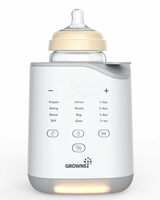 Grownsy
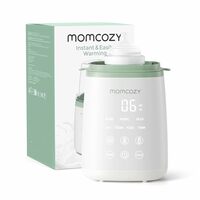 Momcozy
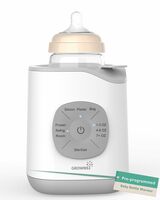 Grownsy