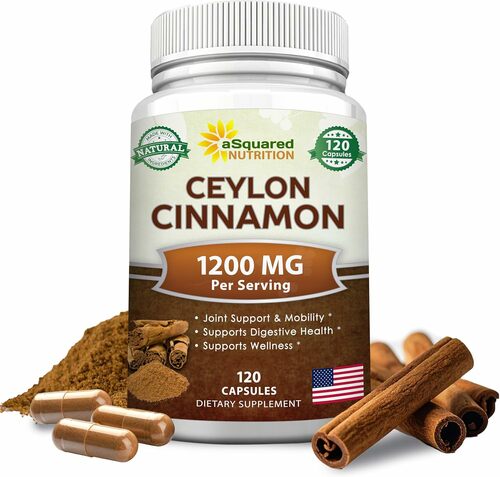
Cinnamon Supplements are known for supporting blood sugar, heart, and metabolic health. BuyersReport's experts have broken down the features, & benefits of the top-rated, most effective options so you can make an informed choice – our comprehensive review can help you find the best cinnamon supplement for your health needs.
 aSquared
 NUTRAHARMONY
 Nutricost
aSquared
Nutricost
aSquared
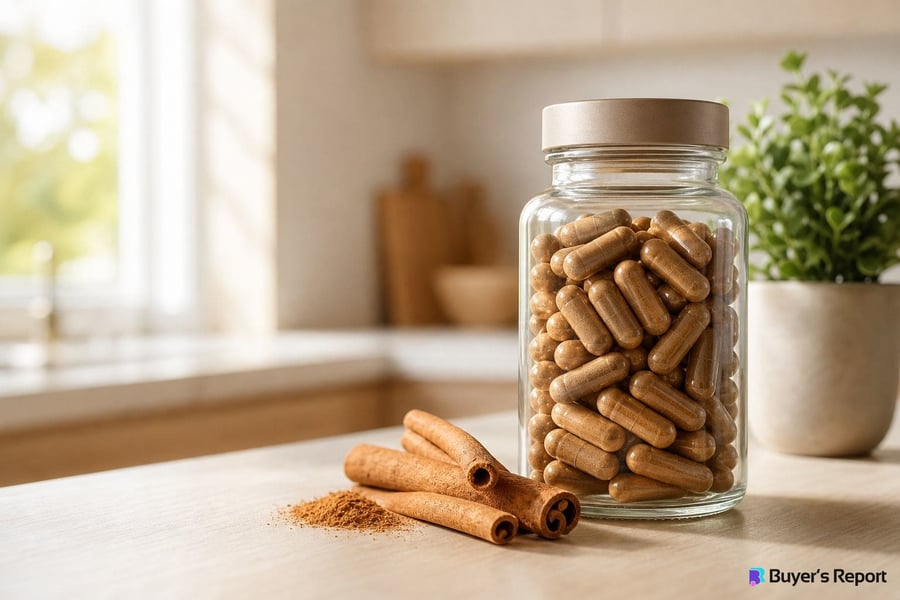
Cinnamon has moved well beyond the spice rack — it's now one of the more widely used botanical supplements among adults interested in metabolic health and blood sugar support. But not all cinnamon is the same, and the species on the label matters more here than with almost any other common supplement. This guide covers what separates a safe, effective cinnamon supplement from a potentially problematic one, with a focus on species verification, chemical compound safety, and what to actually look for before you buy.
Cinnamon's potential bioactivity comes primarily from compounds found in the inner bark of the cinnamon tree — most notably proanthocyanidins (PACs), cinnamaldehyde, and various polyphenols. These compounds are thought to interact with insulin signaling pathways and may support the body's ability to regulate blood glucose levels within the normal range. PAC content, in particular, is associated with greater potential bioactivity, which is why PAC concentration per serving is a meaningful spec to compare across products. The catch is that different cinnamon species contain very different chemical profiles — and one of those differences, coumarin content, has real safety implications for daily supplemental use.
While cinnamon supplements can be a good fit for many health-conscious adults, they're often sought out by people with particular health and wellness objectives. This guide is particularly relevant if you identify with any of the groups below:
Species identification is not a fine-print detail — it's the most important factor in choosing a cinnamon supplement for daily use. The two species sold most often are Cinnamomum verum (Ceylon, sometimes called "true cinnamon") and Cinnamomum aromaticum (Cassia, which includes Chinese and Vietnamese cinnamon). They look similar and smell similar, but they are not necessarily interchangeable, especially at supplemental doses.
Once you've confirmed species, several other factors can help you determine whether a product is worth buying. These criteria allow you to compare options, and will enable you to filter out lower-quality formulations.
Research on cinnamon supplementation has used a wide range of doses, generally from around 500 mg to 2,000 mg of cinnamon per day, often split across one to two servings. Dose matters, and safe use ranges are not firmly established for all populations, so what's studied in a clinical context may not translate directly to every individual. Most standardized extracts are formulated at specific daily doses, so it is important to follow the label directions and treat the stated serving size as a ceiling rather than a floor until you know how your body responds. Consistency over time generally matters more than any single large dose, and taking cinnamon with meals is a common approach that may help support tolerability. Individual results vary.
Cinnamon supplements are generally well-tolerated by healthy adults when taken at reasonable doses of the appropriate species, but there are important caveats that should factor into your buying decision. Cinnamon may have blood-sugar-lowering effects and could interact with diabetes medications or other prescriptions, which means it isn't a neutral supplement for everyone. It's always worth talking to a healthcare professional before starting, especially if you are managing blood sugar or taking diabetes medications. Gastrointestinal discomfort, mouth irritation, and allergic reactions are also possible, particularly at higher doses. People who are pregnant, nursing, or managing liver conditions should be extra cautious and check with a physician before use. Cinnamon supplements are not a drug, are not approved by the FDA as one, and are not intended to diagnose, treat, cure, or prevent any disease. While cinnamon supplements may be appropriate for many healthy adults, factors such as the cinnamon species used, the dosage, and individual health considerations can all influence whether a particular product is a suitable choice.
Cinnamon supplements can be a worthwhile addition to a metabolic health routine — but only if you buy the right product. Species verification comes first: Cinnamomum verum (Ceylon) on the label is non-negotiable for daily use at supplemental doses. From there, prioritize third-party tested products with documented coumarin levels, clear PAC content, and supplements with transparent milligram dosing. A standardized extract generally offers more consistency than plain powder, and certifications like USDA Organic are a useful quality signal on top of independent lab testing. Paying attention to these fundamentals can help you identify options that align more closely with established quality and transparency standards, and will allow you to make a more informed decision when comparing cinnamon supplement products.