Cordless vacuums have come a long way from the lightweight but underpowered models of the past. Today’s options can handle everything from hardwood floors to thick carpets, delivering strong cleaning performance without the hassle of a cord. The challenge is that with so many choices available, finding the right one has become more complicated. The wrong vacuum may run out of battery before you finish cleaning, struggle to pick up debris on certain floor types, or feel heavier and less comfortable to use than expected. This guide cuts through the marketing noise and focuses on the features that have the biggest impact on everyday performance, helping you choose a cordless vacuum that fits your floors, home size, and cleaning habits.
Who Is a Cordless Vacuum For?
A cordless vacuum has the ability to earn a place in almost any home, but it's a particularly strong fit for certain situations and lifestyles. Understanding where it genuinely excels — and where it has limits — will save you from an expensive mismatch. Worth noting up front: cordless models are excellent everyday tools, but they aren't always a like-for-like replacement for a corded machine when it comes to sustained deep-cleaning sessions, and very large homes may still benefit from a corded backup.
- Pet owners: Hair and dander work their way into upholstery, skirting boards, and car seats as much as floors. A cordless model with a mini motorised head and strong suction gives you the reach and flexibility to chase pet mess wherever they land.
- Allergy and asthma households: The ability to vacuum frequently without the hassle of a cord lowers the barrier to daily cleaning, which matters when allergen levels are a concern. Filtration quality becomes especially important here — more on that in the features section.
- Apartment and small-home dwellers: If your floor plan is compact and you don't have a cupboard dedicated to a full-size upright, a lightweight cordless stick offers genuine convenience without meaningful trade-offs on coverage.
- Multi-floor homeowners: Carrying a cordless vacuum between floors is far easier than lugging a corded machine, provided the battery runtime is long enough to cover each level on a single charge — or the model supports swappable batteries.
- Busy households: A cordless vacuum works brilliantly as a quick-clean tool between deeper sessions with a full-size machine, letting you deal with crumbs or tracked-in dirt easily.
Types of Cordless Vacuum
The format you choose shapes everything from how the vacuum feels in your hand to what accessories it can carry. Each type is built around a different cleaning scenario, so it's worth matching the form factor to how you actually move through your home.
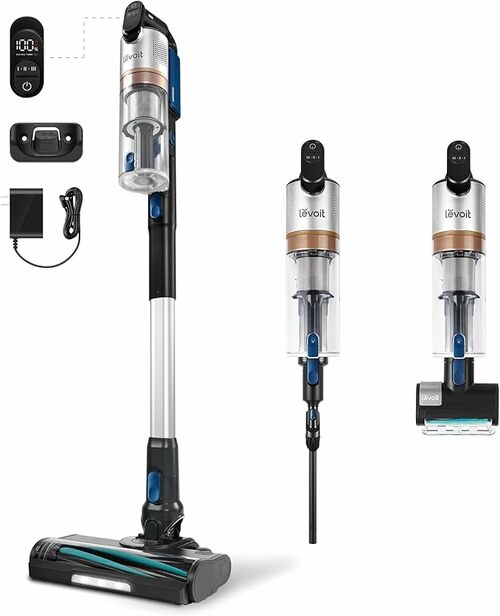
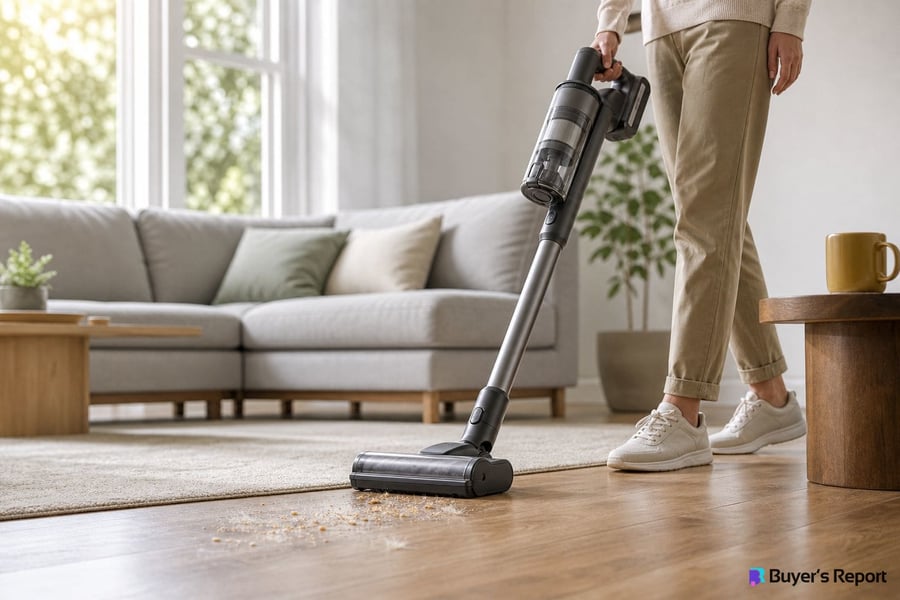
- Stick / upright cordless: The most popular format — tall, slim, and designed for floor-level cleaning. Most include a motorised floor head and a handle positioned high enough to reduce bending. These strike the best balance between suction capacity and ease of use for everyday floor work.
- Handheld cordless: Compact and purpose-built for spot cleaning: car interiors, upholstery, stairs, or spills on kitchen counters. Suction and runtime are typically lower than full stick models, so look at these as a complement to a larger vacuum rather than a replacement.
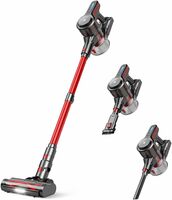
- 2-in-1 convertible: A stick vacuum that detaches into a handheld unit, giving you floor cleaning and above-floor versatility in one machine. This is often the best-value format if you want one cordless vacuum that covers multiple jobs — just check that the detached handheld portion is light enough to hold comfortably at head height.
- Cordless canister: Less common but useful if you prefer the suction power of a canister body with cordless freedom. The motor sits in a separate unit you pull behind you, which can improve floor-head manoeuvrability but adds complexity when navigating stairs.
- Dock-and-go stick: A standard cordless stick that returns to a self-emptying dock between uses, reducing how often you handle the dustbin. Runtime and suction specs still apply — the dock is a convenience feature, not a performance upgrade.
Floor Type Compatibility and Suction Performance
Suction figures — typically quoted in Pascals (Pa) or airflow in cubic feet per minute (CFM) — tell you something useful, but a high Pa rating alone does not guarantee real-world cleaning performance across all surfaces. What matters just as much is the floor head design paired to that suction, and how well the two work together on your specific floors. Performance varies by floor type and debris size, so where possible, verify specs against your actual surfaces rather than relying on headline numbers alone.
- Hard floors: Soft roller heads with felt or microfibre wraparound bristles are ideal here — they pick up fine dust without scattering it, and they won't scratch sealed wood or tile. A vacuum with a hard-floor mode that reduces suction slightly can also prevent lightweight rugs from getting sucked up.
- Low-to-medium carpet: A motorised brush roll is the key requirement. The spinning bristles agitate carpet fibres to loosen embedded debris that suction alone won't shift. Look for models where brush-roll speed is matched to the motor's airflow rather than listed as a separate selling point.
- High-pile rugs: This is where many cordless vacuums struggle. Very dense pile can stall underpowered brush rolls or create excessive drag. Look for a motorised head with adjustable height settings or an auto-surface-detect mode that reduces brush-roll resistance on thicker textiles.
- Dual-mode heads: Some floor heads combine a soft roller and motorised brush roll, switching automatically or via a lever. These are the most versatile option if your home mixes hard floors and carpet, and they save you swapping attachments mid-clean.
Battery and Runtime: Reading Past the Advertised Figure
Battery runtime is one of the most misleading specs in the cordless vacuum category. Advertised battery runtime is typically measured at the lowest power setting, so real-world mixed-mode use — combining standard and boost modes across different floor surfaces — will be meaningfully shorter. Before buying, work out what runtime you actually need by estimating your floor area, then look for a model whose realistic runtime comfortably exceeds that figure.
- Boost vs. standard modes: Most cordless vacuums offer at least two power levels. Boost mode can halve the rated runtime, so if a model is advertised at 60 minutes, expect roughly 25–35 minutes of practical mixed-mode cleaning. Treat the advertised figure as a ceiling rather than a promise.
- Swappable batteries: If your home is large enough that a single charge won't cover it, prioritise models that support additional battery packs. A second battery effectively doubles your runtime without waiting for a recharge, which matters especially in multi-floor homes.
- Charge time: Check how long a flat battery takes to reach full capacity. A 4-hour charge time can be inconvenient if you clean daily; some models include fast-charge options that recover meaningful capacity in under an hour.
- Battery degradation: Li-ion batteries lose capacity over time. Check before you buy whether replacement batteries are sold separately and what they cost — if the battery isn't user-replaceable or is prohibitively expensive, the whole vacuum may need replacing sooner than the body itself warrants.
Key Features to Look For
Beyond suction and runtime, a handful of practical features separate a vacuum you'll enjoy using from one you'll avoid picking up. Weight and balance affect usability significantly, so it's worth thinking about how the vacuum will feel after 20–30 minutes of continuous use, not just how it feels lifting it off the shelf.
- Filtration system: Filtration claims such as "HEPA" are most meaningful when the whole machine is a fully sealed system, not just a HEPA-grade filter housed in an unsealed body. In an unsealed design, air can bypass the filter through gaps in the casing, which matters most for allergy and pet households. Look for "sealed HEPA" or "fully sealed system" wording in the spec sheet. Filtration won't address the underlying causes of allergies, but a well-sealed system can meaningfully reduce the particles a vacuum recirculates into the air while you clean.
- Dustbin capacity: Larger bins mean less frequent emptying, but dustbin size trades off against overall vacuum weight — a 0.8-litre bin adds noticeable bulk compared to a 0.5-litre one. If you have pets or clean infrequently, the larger bin is worth the extra weight; for daily quick cleans, a smaller, lighter bin is easier to manage.
- Bin emptying mechanism: A one-touch hygienic emptying system — where you eject debris directly into a bin without touching it — is worth prioritising if dust or allergens are a concern. Some dock-and-go models auto-empty into a sealed bag at the base station, which is convenient but adds ongoing bag costs.
- Attachment ecosystem: A crevice tool, mini motorised head, extension wand, and upholstery nozzle cover the vast majority of above-floor cleaning jobs. Check whether these are included in the box or sold separately — accessory costs can add significantly to the total price.
- Handle and weight distribution: A vacuum that's front-heavy or handle-heavy becomes fatiguing quickly. Where possible, look for user reviews that mention balance specifically, as spec sheets list total weight but not where that weight sits.
- Warranty length: A two-year warranty is a reasonable baseline for a cordless vacuum at mid-range pricing. Check whether the battery is covered separately — some manufacturers offer shorter warranty terms on the battery pack than on the main body, which is the more meaningful coverage gap to watch for.
Bottom Line
The best cordless vacuum for you is the one whose runtime, floor-head design, and weight work together for your specific home — not the one with the highest suction figure on the box. Start by identifying your primary floor types and the realistic square footage you need to cover on a single charge, then use filtration grade and attachment range to narrow the field further. Get those fundamentals right and you'll have a machine you actually reach for every day, rather than one that spends most of its time on the charger.

 LEVOIT
 Levoit
 LEVOIT
 CHEBIO