A digital bathroom scale sounds like one of the simplest purchases you can make, but walk into any retailer and you'll quickly find yourself choosing between bare-bones weight trackers, body composition monitors loaded with metrics, and Wi-Fi-connected smart scales that sync to your phone — all at wildly different price points. The right choice depends on what you actually need from a daily weigh-in, how many people will use it, and whether connectivity features will genuinely fit into your routine. This guide walks you through what to look for across accuracy, platform specs, body composition reliability, and smart features so you can confidently pick the scale that earns a permanent spot on your bathroom floor.
Who Is This For?
Digital scales serve a surprisingly wide range of users, and knowing which camp you fall into makes it much easier to filter out options that will leave you underwhelmed.
- Everyday weight trackers: If you want a simple, reliable number each morning, a basic digital scale is all you need. Skip the extra features — they add cost without adding value to a straightforward weigh-in routine.
- Fitness enthusiasts and athletes: If tracking body fat percentage, muscle mass estimates, or hydration trends matters to you, a body composition scale gives you more data points to work with.
- Multi-person households: Scales with multiple user profiles store individual baselines separately, so everyone in the house gets accurate trend data without manually switching settings each time.
- Higher-capacity users: Standard scales top out around 300–400 lbs. If any intended user is near or above that range, a high-capacity model rated at 500 lbs or more is the right starting point — not a nice-to-have.
- Health-app users: If you're already tracking fitness data in Apple Health, Google Fit, or a wearable platform, a smart scale that syncs automatically keeps everything in one place without manual logging.
Types of Digital Bathroom Scales
The category spans a wide range of complexity, from a single number on a screen to a full biometric dashboard on your phone. Understanding the core variants helps you avoid paying for features you won't use — or skimping on ones you will.
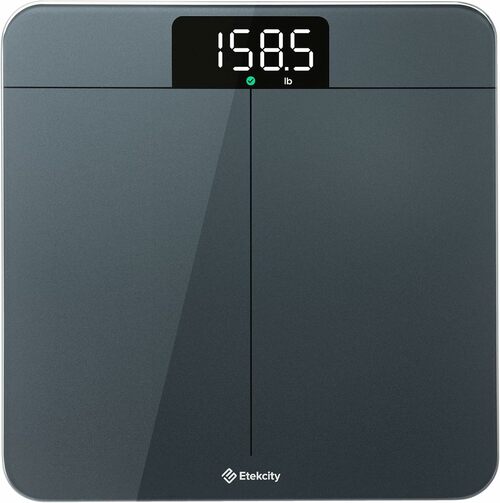
- Basic digital scales: These display weight only and prioritize simplicity. They tend to be affordable, require minimal setup, and are often the most consistent performers day-to-day since there are fewer sensors to introduce variability.
- Body composition (BIA) scales: These use bioelectrical impedance analysis — a small, imperceptible electrical signal passed through the body — to estimate metrics like body fat percentage, muscle mass, bone density, and visceral fat. They're useful for tracking directional trends over time, but results vary from person to person and day to day based on hydration, time of day, and other factors.
- Smart scales: Bluetooth or Wi-Fi connectivity lets the scale push data to a companion app automatically. Wi-Fi models sync passively in the background; Bluetooth models require your phone to be nearby. The difference matters if you don't always weigh in with your phone in the room.
- Multi-user scales: Designed for households, these recognize individual users automatically (usually by weight range) or let you manually select a profile. Look for models that support at least four to eight profiles if you have a larger household.
- High-capacity scales: Built with reinforced platforms and wider sensor configurations to support 500 lbs or more. If standard capacity is even a close call for any user in your home, start here rather than risk inaccurate readings near the rated limit.
Accuracy, Readability, and Platform Specs
These three specifications do more to determine whether a scale actually serves you well than any app feature or metric count. A scale that gives you inconsistent readings is of little use regardless of how many body composition stats it claims to measure.
- Consistency over precision: The most important accuracy question isn't whether the scale reads exactly correct on a single weigh-in — it's whether it gives you the same reading twice in a row under the same conditions. Look for scales with four or more load cell sensors, which distribute weight evenly and reduce variability caused by shifting your stance slightly.
- Display resolution: Scales that measure in 0.1 lb increments give you more granular trend data than those that round to 0.2 lbs. For most people the difference is minor, but athletes or those tracking small weekly changes will appreciate the finer increment.
- Display clarity: A large, backlit display lets you read your weight without bending down or squinting — a small detail that makes a real difference at 6 a.m. Look for a digit height of at least one inch and a backlight that activates automatically.
- Platform size and stability: A platform under 11 inches wide can feel unstable for larger feet or users who weigh in barefoot with a wider stance. Wider platforms — 12 inches or more — also tend to accommodate users closer to the scale's weight capacity more comfortably.
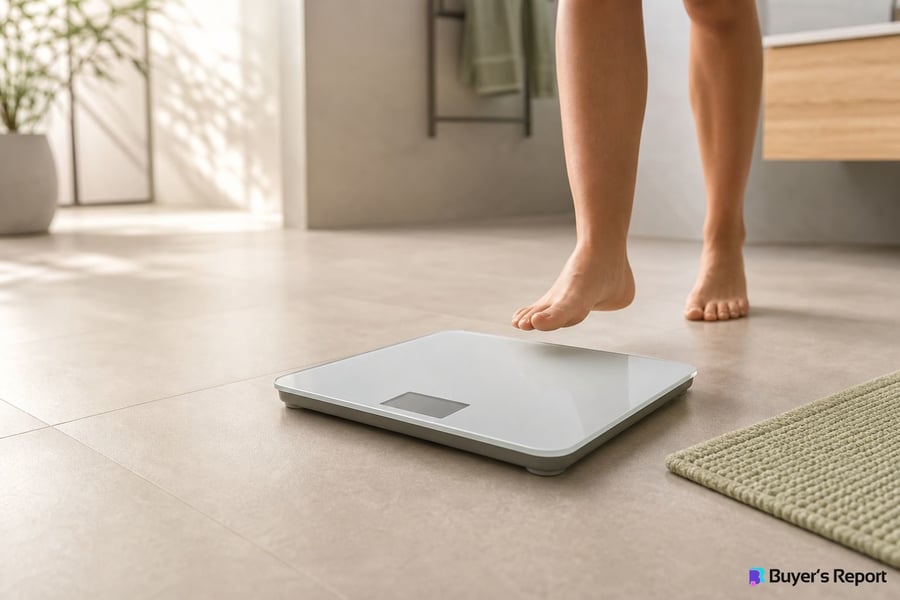
- Surface compatibility: Placement on a hard, level surface improves accuracy. Carpet compresses under load and introduces inconsistency; if your bathroom has carpet, look for a scale that includes hard-floor leveling feet or a tile pad for the scale to rest on.
Body Composition Features: What to Believe
BIA-based body composition scales are appealing, but it's worth knowing what you're actually buying before treating those numbers as gospel. Body composition readings — body fat percentage, muscle mass, and similar metrics — are estimates generated by a mathematical model, not clinically validated measurements. They're best used for tracking relative changes over time rather than for setting a precise baseline. A scale isn't a diagnostic medical device, and it can't diagnose, treat, or cure any condition — so it's worth checking in with a healthcare professional before using weight or body composition data to make health decisions.
- Metrics worth tracking: Body fat percentage trend and muscle mass trend are the most commonly cited BIA outputs. When measured consistently — same time of day, same hydration level — these can reveal directional changes that weight alone won't show.
- Metrics to treat skeptically: Visceral fat scores, metabolic age, and bone density estimates carry significant variability between scale models and individual users. They can be interesting data points, but don't weigh purchasing decisions too heavily on their inclusion.
- Who should skip BIA: BIA scales send a small electrical current through the body and are generally not recommended for individuals with pacemakers or other implanted electrical devices. Check with a doctor before purchasing if this applies to you.
Smart Connectivity and App Ecosystems
A smart scale is only as useful as the app it syncs with. Before committing to a connected model, check whether the companion app works with the platforms you already use — and whether it will keep working over time.
- Bluetooth vs. Wi-Fi: Bluetooth requires your phone to be within range when you step on the scale; Wi-Fi syncs data automatically whenever the scale is on your network. If you don't always have your phone nearby during your morning routine, Wi-Fi is the more seamless option.
- App ecosystem fit: Check that the scale's app integrates with Apple Health, Google Fit, or whichever platform anchors your health tracking. An app that exists in its own silo means manually re-entering data elsewhere, which most people quickly stop doing.
- Multi-user profile support: Smart scales vary significantly in how many profiles they support and how reliably they auto-identify users. If profile switching is important to your household, look for reviews that specifically test this feature — auto-recognition by weight range can fail when two users are close in weight.
- App longevity: Software-dependent features are only as durable as the company behind them. A scale with a strong track record and an active app update history is a safer long-term bet than a cheaper option from an unknown developer.
Bottom Line
For most people, the best digital bathroom scale is the one that gives you the same reliable number every morning without any fuss. Prioritize consistent accuracy and a clear display first — those fundamentals matter more than any feature list. If body composition metrics or app connectivity genuinely fit your routine, they're worth the upgrade; if not, a well-built basic scale will serve you just as well at a fraction of the price. Know your household's weight capacity needs before you shop, and make sure whatever you buy will sit flat on a hard floor where readings will stay consistent over time.

 Etekcity
 Etekcity
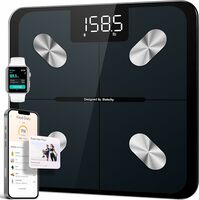 Etekcity
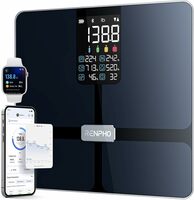 RENPHO
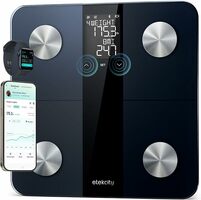 Etekcity