An exercise bike is one of the most practical investments you can make for home fitness — low-impact enough to use daily, compact enough to fit most rooms, and versatile enough to serve everyone from casual riders to seasoned athletes. The challenge isn't finding one; it's finding the right one. With five distinct bike types, multiple resistance systems, and a growing range of connected features that add ongoing subscription costs, a poorly matched purchase can leave you with a machine that does little more than collect dust. This guide walks you through every decision that matters — from riding position and flywheel weight to noise levels and total cost of ownership — so you can buy with confidence.
Who Is an Exercise Bike For?
Exercise bikes suit a remarkably wide range of users, but the type that's right for you depends heavily on your fitness goals, physical condition, and available space. Before browsing models, it's worth identifying which of the following profiles most closely matches your situation.
- General cardio seekers who want consistent, low-impact daily exercise at home will find an upright stationary bike the most straightforward fit — familiar posture, broad resistance range, and typically the most competitive pricing.
- Studio-style cycling fans replicating class-based workouts indoors should look specifically at indoor cycles, which offer the aggressive geometry, heavy flywheel, and resistance feel closest to a road or studio experience.
- Older adults and those returning to exercise after a break often prefer recumbent bikes, whose reclined seat and back support reduce strain on the hips, knees, and lower back. If you have a pre-existing injury or are recovering from one, talk to your care team about whether cycling is appropriate before relying on a bike as part of your routine.
- Interval-training enthusiasts chasing full-body intensity should look at air bikes, whose fan-based resistance scales automatically with effort and whose dual-action handlebars engage the upper body simultaneously.
- Small-space and apartment dwellers prioritising quiet operation will benefit from foldable or compact uprights with magnetic resistance — minimal footprint, minimal noise, adequate for moderate daily use.
Results from exercise vary by individual — fitness outcomes depend on frequency, intensity, and overall lifestyle, regardless of which bike type you choose.
Bike Types and How They Differ
Each exercise bike variant is built around a different riding position and training philosophy. Understanding the differences helps you eliminate the wrong options quickly and focus on what genuinely fits your goals.
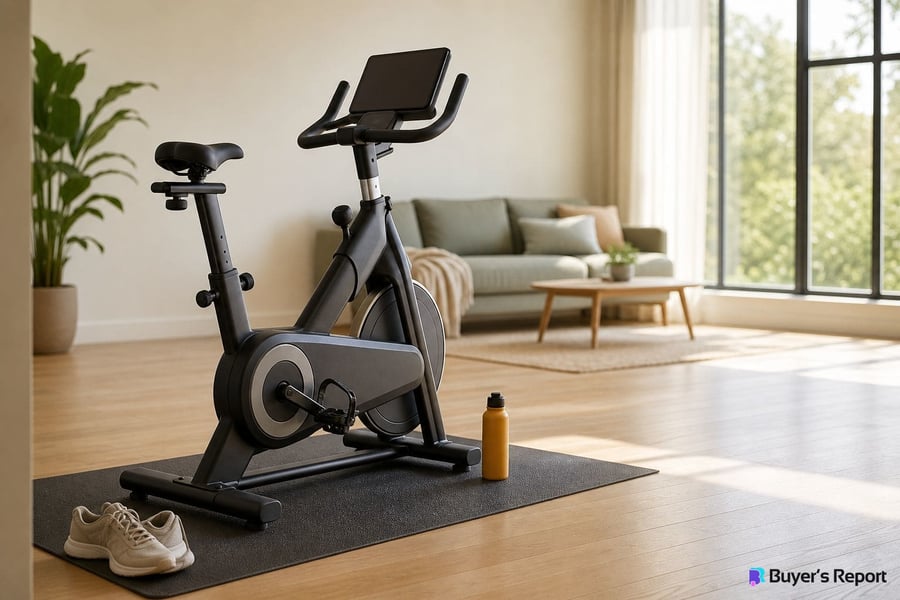
- Upright stationary bike mimics a traditional bicycle posture with the rider seated over the pedals. It suits general cardio training, accommodates most resistance systems, and works for a wide age range. The most common type you'll encounter across all price points.
- Recumbent bike positions the rider in a reclined seat with the pedals out in front rather than below. The back support reduces spinal loading, which many users with lower-back sensitivity or limited mobility find more comfortable. Consult a physician or healthcare professional before starting a new exercise program, especially if you have a pre-existing health condition or injury.
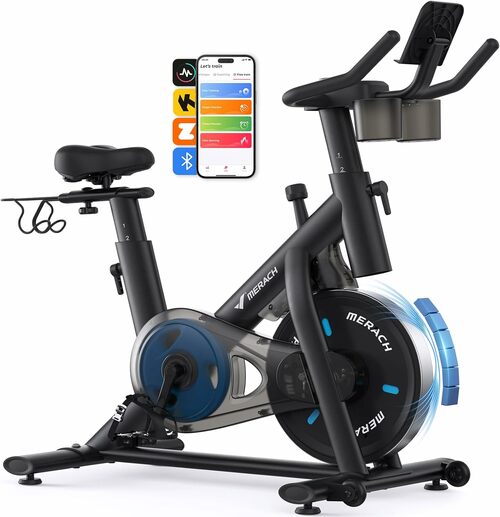
- Indoor cycle / spin bike uses a road-bike geometry with a forward lean, a heavy flywheel, and a narrow saddle. It's purpose-built for high-intensity, performance-oriented training and closely replicates the feel of outdoor road cycling.
- Air bike replaces the traditional flywheel with a large fan. Resistance increases automatically the harder you pedal or pull the handlebars — there's no dial to adjust. This makes it well-suited to interval training but less ideal for steady, measured efforts.
- Foldable / compact upright trades some durability and resistance range for a dramatically smaller footprint. A practical choice for apartments or shared spaces, but typically best suited to lighter-duty, moderate-intensity use rather than daily high-intensity sessions.
Resistance Systems Compared
The resistance system is arguably the most consequential spec to evaluate — it determines how the bike feels to ride, how much noise it produces, and what ongoing maintenance will cost you. The four main systems each suit different buyers.
- Magnetic resistance uses magnets to create drag without any contact between components. The result is whisper-quiet operation, precise micro-adjustment of resistance levels, and virtually zero maintenance. This is the best choice for apartment dwellers and anyone who values a quiet training environment or wants fine-grained control over workout intensity.
- Friction resistance presses a felt or leather pad against the flywheel to create drag. It's the most affordable system to manufacture, which is why it's common on entry-level bikes, but it produces more noise, wears down over time, and requires periodic pad replacement. Acceptable for budget buyers with low-intensity goals and non-shared living spaces.
- Air resistance scales automatically with pedal speed — the faster you go, the harder it gets. There's no separate adjustment mechanism, which keeps the design simple and maintenance minimal. The trade-off is that the fan generates significant noise, making air bikes poorly suited to apartments or noise-sensitive environments.
- Electromagnetic resistance is a step up from standard magnetic systems, using computer-controlled electromagnets for instantaneous, precise resistance changes. Found on higher-end connected bikes, it enables automatic workout programs to adjust resistance on the fly. Expect to pay a meaningful premium over standard magnetic models.
Alongside resistance type, check the drive system: belt drives are quieter and lower-maintenance than chain drives, which are noisier but easier and cheaper to service. For apartment use, belt plus magnetic is the quietest combination available.
Fit, Flywheel, and Build Quality
Three mechanical factors — adjustability, flywheel weight, and frame construction — determine whether a bike is genuinely usable long-term or becomes a source of discomfort and frustration. Get these right and the rest of the buying decision becomes much easier.
- Seat adjustability is the single most important fit factor. Look for both height and fore-aft (forward/backward) adjustment so you can dial in proper knee extension and reach. Proper bike fit is essential — an ill-fitted bike can cause knee, hip, or back strain, and incremental adjustment notches give you far more precision than bikes with only a handful of fixed positions.
- Handlebar adjustability matters most if multiple users share the bike or if you have a longer or shorter torso than average. Height-adjustable handlebars are standard; fore-aft adjustment is a bonus worth prioritising on higher-spend purchases.
- Flywheel weight governs the smoothness and momentum of the pedal stroke. For upright and recumbent bikes, aim for at least 20 lbs (roughly 9 kg); for indoor cycles, 40 lbs (around 18 kg) or more produces the road-like feel that dedicated riders expect. Lighter flywheels feel choppy at lower speeds and offer a narrower effective resistance range.
- Weight capacity and frame stability are non-negotiable safety factors. Always observe the manufacturer's stated maximum user weight capacity, and if you're close to the limit, size up rather than down. A heavier steel frame typically indicates greater long-term rigidity, especially under high-intensity use. Note that a higher price tag is not in itself a guarantee of safety — verify the specs regardless of where the bike sits in the market.
- Warranty coverage signals how much confidence the manufacturer has in its own build quality. Look for a lifetime warranty on the frame, two to three years on major mechanical parts, and at least one year on labour. Shorter coverage periods on new bikes at any price point are a red flag worth taking seriously.
Connected Features and Total Cost of Ownership
Integrated touchscreens and app-based workout platforms have become a prominent selling point at the mid-to-upper end of the market. They can genuinely enhance motivation and structure — but they also add layers of cost that many buyers underestimate before purchasing.
Subscription costs for connected platforms are ongoing and separate from the purchase price of the bike. A compelling library of live and on-demand classes may carry a monthly fee that, over two to three years, can rival or exceed the cost of the bike itself. Before committing to a connected model, honestly assess whether you'll use the platform consistently enough to justify that ongoing spend.
- Screen size and quality affects usability during workouts — a larger, brighter display is easier to follow when you're breathing hard. But a built-in screen locks you into that manufacturer's ecosystem, whereas a simple tablet holder lets you use any app or streaming service you already pay for.
- Open vs. closed ecosystem is a meaningful distinction. Some bikes work exclusively with their own proprietary platform; others connect via Bluetooth or ANT+ to third-party apps, giving you flexibility if the original platform is discontinued or raises its prices.
- Conventional bikes with manual resistance and basic console readouts — speed, cadence, time, distance, calories — are a perfectly valid choice if you don't need guided classes. They cost less upfront and carry no ongoing fees, making total cost of ownership significantly lower over a three-to-five-year ownership period.
Safety Certifications and Specs to Verify Before Buying
Before finalising any purchase, take a few minutes to confirm the following on the product spec sheet or packaging — these are purchase-critical checkpoints, not afterthoughts.
- Safety certification marks such as UL, CE, or equivalent national safety standards confirm the bike has been independently tested for electrical safety (relevant to any model with a powered console, motor, or resistance controller) and structural integrity.
- Maximum user weight rating must be verified against actual user weight before purchase. This figure is a hard engineering limit, not a loose guideline — exceeding it compromises both frame integrity and your safety over time.
- Stability and anti-tip features worth confirming include levelling feet or non-slip floor caps, which are especially important on hard or uneven surfaces. Some models include transport wheels, but verify these don't compromise stability during use.
- Emergency stop mechanism on indoor cycles should be a physical brake — typically a pad that presses directly onto the flywheel when you push down on the resistance knob. Confirm this feature is present before buying any spin bike, as the flywheel continues spinning under its own momentum after you stop pedalling.
- Floor protection is worth confirming if you're placing the bike on hardwood or laminate — a mat rated for exercise equipment use protects your floor and reduces noise transmission to rooms below, which matters in apartments or multi-storey homes.
Bottom Line
The right exercise bike is the one that matches your riding posture, fits your training goals, and works within your actual space and budget — including the ongoing costs if you opt for a connected model. Start by choosing the bike type that suits your body and goals, then prioritise a resistance system that fits your noise tolerance and maintenance appetite, and confirm fit adjustability before committing. A well-chosen bike that you'll actually use consistently is worth far more than a feature-loaded model that doesn't suit how you train.

 MERACH
 Niceday
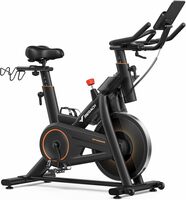 MERACH
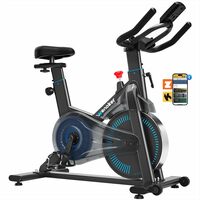 Wenoker
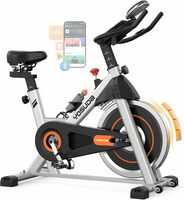 YOSUDA
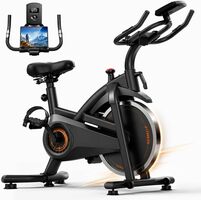 CURSOR FITNESS