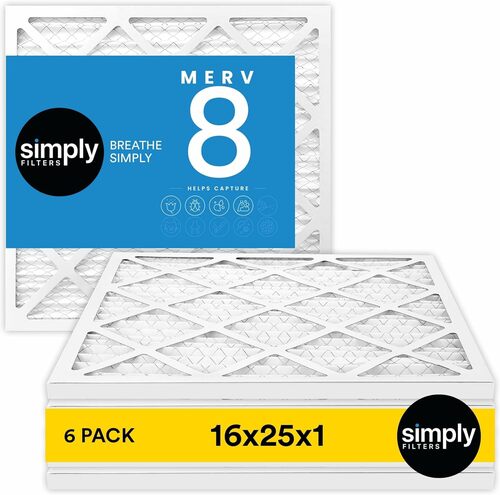
Furnace filters help trap dust, allergens, and airborne particles to keep your HVAC system running efficiently and improve indoor air quality. BuyersReport's experts have broken down the features & benefits of our top-rated, most effective options so you can make an informed choice – our comprehensive review can help you find the best replacement filter for your home's heating and cooling system.
 Simply
 Simply
 PuroAir
Simply
PuroAir
Simply
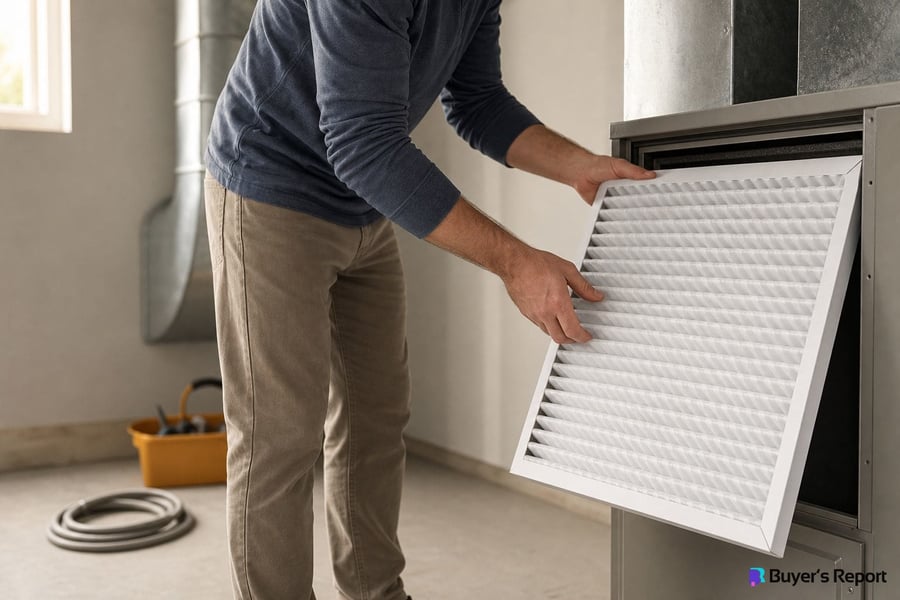
Furnace filters are one of the most frequently replaced components in any home, yet they're often chosen in a hurry — grabbed off a shelf by size alone, without much thought to filtration performance or HVAC compatibility. The right filter helps your heating and cooling system run efficiently while capturing dust, dander, pollen, and other airborne particles before they circulate through your home. This guide walks you through the key specs, filter types, and household factors that should drive your buying decision, so you spend less time guessing and more time breathing easier.
MERV — Minimum Efficiency Reporting Value — is the standardized scale used to rate how effectively a filter captures airborne particles, running from 1 (minimal filtration) to 16 (near-hospital-grade). It's the single most important number to understand when comparing filters, but it comes with a real trade-off: MERV rating directly affects both filtration effectiveness and system airflow — higher is not always better for every system. A filter that is too restrictive for a given HVAC system can reduce efficiency and potentially cause system strain, so matching the MERV rating to your equipment and household needs is what gets the best result.
Even the best filter is useless if it doesn't fit properly. Always verify exact filter dimensions (nominal vs. actual) before purchasing to ensure a proper, gap-free fit. Nominal size is the rounded number printed on the filter (e.g., 16×25×1), while actual size is the true physical measurement, which is usually a fraction of an inch smaller. A filter that's too small leaves gaps around the edges, allowing unfiltered air to bypass the media entirely.
Beyond MERV rating and size, your household's specific air quality factors should drive the filtration level you choose. Pets, smoking, allergies, and home size all influence how hard your filter works and how quickly it gets loaded with particles. A good filter can meaningfully reduce airborne particles, but no filter alone eliminates all allergens or addresses underlying respiratory conditions — set expectations accordingly.
Furnace filters span a wide range of materials and designs, each with different upfront costs, replacement intervals, and performance ceilings. The cheapest filter per unit is rarely the cheapest filter over a year of use. Replacement frequency varies by filter type, household size, pets, and air quality needs, so think in terms of annual cost — how many filters you'll buy, how often, and what performance you're getting for that spend. A well-matched, regularly replaced filter can also help your system run more efficiently, though actual energy impact depends heavily on your equipment and usage patterns.
Choosing the right furnace filter comes down to three things working together: the correct MERV rating for your household's air quality needs, an exact size match for a gap-free fit, and compatibility with your HVAC system's airflow capacity. Most households land in a good place with a MERV 8–11 pleated filter replaced every 60–90 days — but if you have pets, allergies, or air quality concerns, stepping up to MERV 11–13 is worth the modest cost increase. When in doubt about what your equipment can handle, consult your HVAC system's owner's manual or manufacturer guidance for the recommended filter specification before going higher on the MERV scale. A well-matched filter, replaced on schedule, is one of the simplest ways to protect both your equipment and the air in your home.