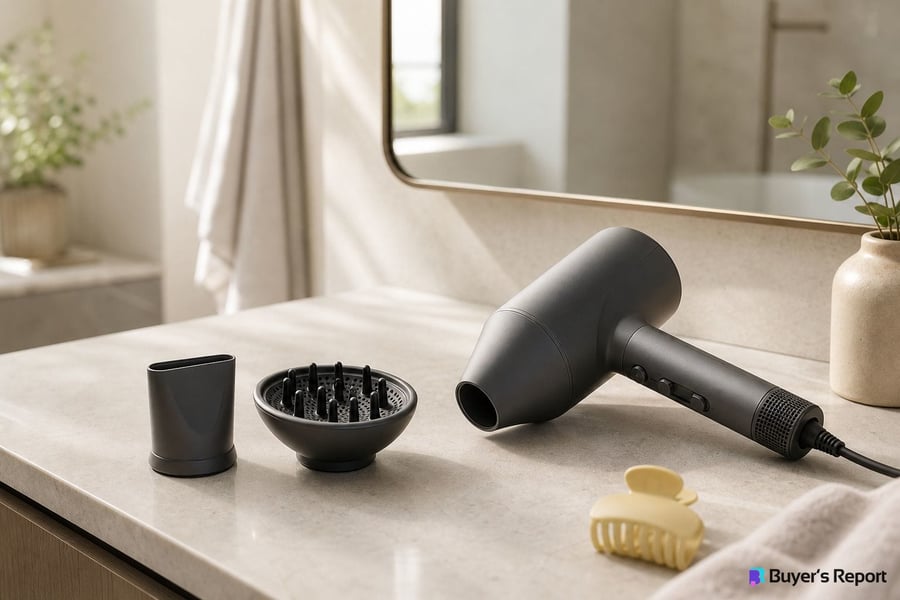
A hair dryer seems like a straightforward purchase until you're standing in front of dozens of options, each promising shinier, smoother, or faster results. The wrong dryer for your hair type can mean slower drying, more frizz, or cumulative heat exposure over time — while the right one can meaningfully improve both the process and the outcome. This guide cuts through the marketing language around wattage, motor technology, and heat-emission coatings to help you match a dryer to your actual hair, your styling goals, and your daily routine. Results vary based on individual hair type, texture, and technique.
Not everyone needs to spend top dollar on a new dryer, but there are clear situations where a thoughtful upgrade pays off. If your current dryer leaves your hair frizzy, takes a long time to dry, or runs uncomfortably hot with no way to dial it back, the technology has genuinely moved on. Here are the buyers who benefit most from a deliberate, well-matched choice:
- Fine or thin hair: Fine hair is more vulnerable to high heat. Look for a dryer with low heat settings and a reliable cool-shot button, not just maximum power.
- Thick, coarse, or curly hair: Underpowered dryers make drying a chore. Higher wattage and strong airflow help you dry efficiently without holding the dryer in one spot too long.
- Daily users: If you dry your hair every morning, motor quality and heat control matter far more than they do for occasional users. A durable, adjustable dryer is a better long-term fit over hundreds of sessions.
- Frequent travelers: A standard home dryer plugged into the wrong voltage can be unsafe or simply burn out. Travelers should look for compact, lightweight models with confirmed dual-voltage capability.
- Styling-focused users: If you're chasing volume, smoothness, or defined curls, the attachments and heat-speed combinations a dryer ships with are just as important as raw power.
Technology Types: Ionic, Ceramic, Tourmaline, and Titanium
Most hair dryers today are marketed around one or more heat-emission technologies. These aren't just buzzwords — each affects how heat is delivered to your hair, and matching the right one to your hair type is one of the most useful filters you can apply when comparing models.
- Ionic: Ionic dryers emit negative ions that interact with water on the hair, which can speed drying and help reduce frizz by smoothing the cuticle. They tend to work well on normal to thick hair and are a solid all-around choice.
- Ceramic: Ceramic components distribute heat more evenly across the airstream, reducing hot spots. This makes ceramic dryers a gentler option for fine, color-treated, or chemically processed hair that's more vulnerable to uneven heat exposure.
- Tourmaline: Tourmaline is a mineral coating that generates a higher concentration of negative ions than standard ionic dryers. This often translates to a smoother finish with less frizz, and it's particularly appealing for coarse or frizz-prone hair types.
- Titanium: Titanium heating elements are lightweight and reach high temperatures quickly, making them efficient for thick, coarse, or very long hair that needs serious heat to dry through. Because titanium runs hotter, it's generally less suited to fine or fragile hair.
Wattage and Motor Type: Which Spec Actually Matters More
Wattage is the number most buyers focus on, but motor technology is often the more meaningful spec. A conventional AC brush motor at 1875W and a brushless DC (BLDC) motor at a lower rated wattage can produce very different real-world results — the BLDC motor typically dries faster because it moves air more efficiently, not just more powerfully. Understanding both specs together will help you avoid being misled by a single number on the box.
- Wattage (1000–1400W): Sufficient for fine, short, or thin hair. More power than this can be harder to control on delicate hair without precise heat settings. If your hair dries quickly, extra wattage adds weight and cost without real benefit.
- Wattage (1600–2000W): A better fit for thick, long, or coarse hair. Higher wattage moves more air and generates more heat, which can meaningfully reduce drying time on dense hair.
- Conventional AC motors: Common in budget to mid-range dryers. They're heavier and louder than brushless alternatives and tend to have shorter lifespans, but they remain effective and widely available.
- Brushless DC (BLDC) motors: Found in premium dryers, BLDC motors are lighter, quieter, and more durable. They reach higher speeds more efficiently, which means faster drying with less bulk — a meaningful difference if you dry your hair daily or have a lot of it.
High heat used frequently can cause cumulative damage over time; adjustable heat settings — especially on lower-wattage or BLDC-motor models — help minimize that risk by giving you precise control.
Key Features to Look For
Beyond technology and wattage, a handful of practical features separate a dryer that fits your lifestyle from one that merely works. These are the details worth checking on any model before buying.
- Heat and speed settings: Look for at least three heat settings and two speed settings. More combinations give you more control, which is especially useful if you switch between a quick rough-dry and a careful finish-dry.
- Cool-shot button: A burst of cool air helps set your style after shaping by closing the cuticle. This is a key feature for anyone focused on volume or smoothness — don't skip it.
- Attachments included: A concentrator nozzle directs airflow precisely, which helps with smoothing and blow-outs. A diffuser disperses air gently and is important for curly or wavy hair. A comb attachment helps detangle and dry thick hair simultaneously. Models that include only a concentrator are less versatile.
- Weight and balance: Lighter dryers reduce arm fatigue during long drying sessions. If you have thick or long hair that takes more than ten minutes to dry, weight is a real ergonomic consideration.
- Cord length and swivel: A cord of at least six feet gives you freedom of movement. A 360-degree swivel joint at the dryer prevents the cord from tangling mid-session — a small feature that makes a noticeable daily difference.
- Dual-voltage capability: Dual-voltage labeling (100–240V) is required for safe international use, so check the dryer's label or spec sheet before traveling. Using a single-voltage dryer abroad without an appropriate converter can damage the motor or create a safety hazard.
Safety Features and Compliance to Verify Before Buying
Hair dryers are used near water and heat simultaneously, which makes safety certification a non-negotiable part of the buying decision. Before purchasing, verify the following on the product spec sheet or packaging.
- Third-party safety certification: Check that the dryer is certified by a recognized safety body (e.g., ETL, UL, CE) before purchase. These certifications confirm the product has been independently tested for electrical and thermal safety standards.
- GFCI compatibility: Many certified dryers are designed to work safely on GFCI (ground-fault circuit interrupter) outlets, which are standard in bathrooms. Confirm the dryer is rated for bathroom use.
- Overheat protection: Look for an automatic thermal cutoff, which shuts the dryer down if it overheats. This protects both the motor and the user during extended sessions.
- Filter and ventilation design: A clogged intake filter reduces airflow and raises internal temperatures. Always follow the manufacturer's instructions, especially regarding filter cleaning and avoiding use near water — both affect safety and longevity.
Bottom Line
Buying the right hair dryer comes down to three honest questions: What's your hair type, how often do you use it, and what do you actually need it to do? Fine hair tends to do better with gentle, controlled heat than with maximum wattage. Thick or coarse hair benefits from real airflow power, ideally from a BLDC motor or a higher-wattage conventional dryer. Daily users should prioritize motor quality and adjustable heat over flashy specs. Travelers should confirm dual voltage before they pack. Once you know where you fall, the technology type — ionic, ceramic, tourmaline, or titanium — helps you refine further. Match those two layers and you'll spend less time second-guessing and more time happy with the result.

 Ella Bella
 Ella Bella
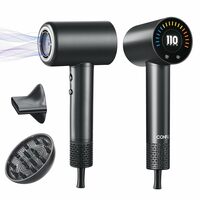 CONFU
CONFU
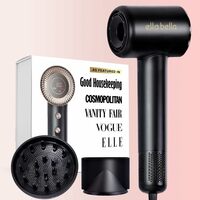 Ella Bella
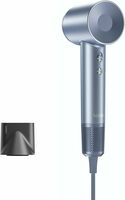 Laifen
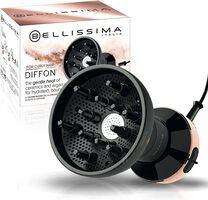 BELLISSIMA
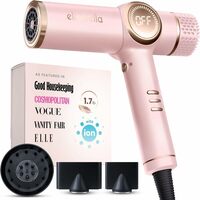 Ella Bella