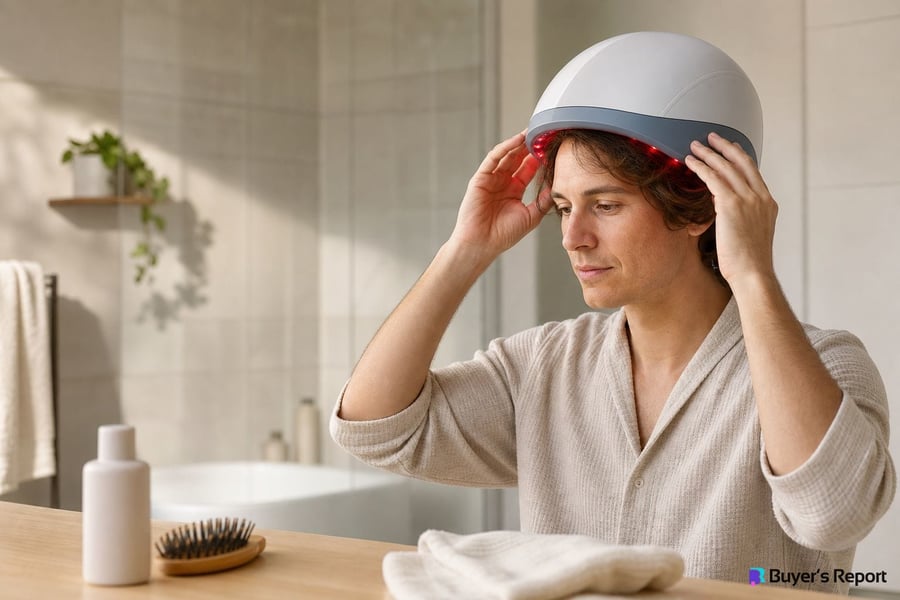
Hair growth devices have moved from clinical settings into everyday bathrooms, offering a non-invasive, at-home option for adults dealing with thinning hair or early pattern hair loss. Powered by low-level light therapy (LLLT) or mechanical scalp stimulation, these devices may support the conditions associated with healthier hair growth — but choosing the right one requires understanding what the technology actually does, how regulatory clearance works, and whether the device matches your specific pattern of thinning. No device can diagnose, treat, cure, or prevent any disease or medical condition, and results vary by individual, hair loss stage, and consistency of use. This guide walks you through the purchase-critical decisions: device type, key specs, safety verification, and what to realistically expect before you spend.
Who Should Consider a Hair Growth Device?
These devices are most evidence-supported for androgenetic alopecia — pattern hair loss — and are best suited to people in early-to-moderate stages of thinning, where follicles are still active. Evidence for other types of hair loss is more limited, and a device is not a substitute for professional diagnosis or medical care. If one or more of the situations below describes you, a hair growth device may be worth exploring.
- Early-to-moderate thinning: You've noticed a widening part, a receding hairline, or overall decreased density, but haven't progressed to significant bare patches. This is the stage where light-based devices have the most clinical backing.
- Topical treatment users: You're already using minoxidil or another topical and want to add a complementary device-based protocol. Many buyers use both in parallel.
- Non-invasive preference: You want to avoid or delay medications, injections, or surgery. At-home devices offer a hands-free, drug-free option you can use on your own schedule.
- One-time cost preference: Unlike ongoing topical subscriptions, a device is a single purchase. Higher upfront cost, but no recurring spend once you own it.
Device Types and How They Work
Three core technologies dominate the hair growth device market, and they differ meaningfully in their evidence base, invasiveness, and ideal use case. Understanding what each one does helps you match the right tool to your situation.
- Laser caps and helmets (LLLT): Wearable devices that use low-level laser light to deliver photobiomodulation to the scalp — essentially stimulating cellular activity around hair follicles. They're hands-free, cover the full scalp in a single session, and represent the most clinically studied category for androgenetic alopecia. Most require 20–30 minute sessions several times per week.
- LED light therapy helmets: Similar in form to laser caps but using LEDs rather than laser diodes. Coverage is comparable, sessions are hands-free, and cost is often lower. LED devices can be harder to verify on wavelength accuracy, so confirming the nm output is especially important here.
- Handheld combs and bands: These deliver laser or LED light to targeted areas and suit people with localized thinning or those who want a lower-cost entry point. The trade-off is lower scalp coverage per session and a more active, time-consuming protocol.
- Scalp microneedling rollers and stamps: Mechanical devices that create micro-channels in the scalp to stimulate growth factors and potentially enhance topical absorption. No light is involved. These are not appropriate for everyone — microneedling is contraindicated in scarring alopecia and several other scalp conditions, so confirm your hair loss type with a professional before considering this category.
- Combination laser + LED hybrids: Some devices pair both light sources in a single cap or helmet. In theory this extends wavelength coverage, but as a buyer you should verify both light types fall within the clinically studied range rather than assuming more technology means better results.
The Specs That Actually Matter
Hair growth device specs can look impressive on paper while telling you very little that's useful. Three numbers genuinely influence whether a device is likely to deliver meaningful scalp stimulation — and knowing how to read them helps you compare models on equal footing.
- Wavelength (nm): Red light in the 620–678 nm range is what clinical trials on LLLT hair growth have used. Near-infrared wavelengths at 808 nm and above fall outside the studied range for hair loss and should not be assumed to deliver the same effect. If a device lists only near-infrared output or doesn't specify wavelength at all, that's a meaningful gap in the spec sheet.
- Diode count and coverage: More diodes across a cap or helmet generally means more of your scalp receives light per session. A low diode count in a full-scalp device can leave large untreated gaps. Look for the coverage area stated in cm² alongside the diode count rather than relying on diode count alone.
- Energy dose (J/cm²): This measures how much light energy your scalp actually receives per session. Research points to a therapeutic window — too little and the stimulus is insufficient; beyond a certain point, more frequent or higher-dose exposure does not improve outcomes and can reduce efficacy. A device that publishes its irradiance output and estimated J/cm² per session lets you verify it sits within that window, which is a sign the manufacturer is being transparent.
Understanding FDA Clearance Before You Buy
Regulatory language on hair growth device listings is easy to misread, and the distinction carries real purchase consequences. These devices are FDA-cleared, not FDA-approved as drugs — the regulatory distinction matters. Clearance means the device has been reviewed for safety and substantial equivalence to a predicate device; it is not the drug-approval process and is not a guarantee of regrowth.
- 510(k) clearance vs. registration: A device with its own FDA 510(k) clearance number has been individually reviewed. "FDA-registered" simply means the facility that makes it is on file with the FDA — it says nothing about the device itself being evaluated. Verify the specific clearance number, not just a claim on the box.
- "FDA-cleared technology": This phrase often means the manufacturer is referencing someone else's clearance, not their own. If the product listing uses this wording, dig deeper to confirm whether the device in your cart has independent clearance.
- Return window vs. results timeline: Results typically require a minimum of 16–20 weeks of consistent use — do not expect rapid or dramatic regrowth. A standard 30- or 60-day return window will almost certainly expire before you can assess outcomes. Look for a 90-day or longer return policy, and understand that even that may not fully cover the evaluation period.
Safety and Contraindications to Verify Before Buying
Consult a dermatologist or trichologist before starting, especially if you have an underlying scalp condition, are pregnant, or are taking medications. Before purchasing, check the device's contraindication list against your own situation — contraindications are non-negotiable disqualifiers, not cautions to weigh casually. Active scalp infections, photosensitivity disorders, anticoagulant use, and pregnancy are all reasons to avoid certain devices or seek professional guidance first.
- Active scalp infections: Light-based devices should not be used over infected, inflamed, or broken skin. Resolve any active scalp condition under professional care before introducing a device.
- Photosensitivity and medications: Certain medications — including some antibiotics, antifungals, and anticoagulants — increase photosensitivity or carry other interaction risks worth raising with a clinician before you start.
- Pregnancy: A standard contraindication for both light therapy and microneedling devices, regardless of hair loss type or device power level.
- Microneedling-specific risks: Scalp microneedling devices carry a distinct contraindication profile from light devices and are not appropriate for scarring alopecia or several other hair loss types.
- Eye protection for laser devices: Laser-emitting caps and combs require eye protection if the eyes could be exposed to direct or reflected light. Check whether the device includes appropriate eyewear and what the manufacturer's guidance says about safe positioning during use.
Bottom Line
A well-chosen hair growth device can be a meaningful addition to an androgenetic alopecia routine — particularly for people in early-to-moderate stages who want a hands-free, non-invasive option alongside or instead of topicals. The most important purchase decisions come down to three things: confirming the device carries its own FDA 510(k) clearance, verifying the wavelength sits in the 620–678 nm red light range, and choosing a device type that matches your coverage needs and daily schedule. Go in with a realistic timeline and a return policy that gives you enough runway to actually evaluate the device.

 iRestore
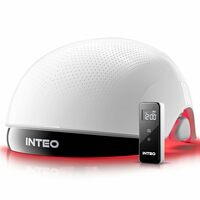 INTEO
INTEO
 iRestore
 iRestore