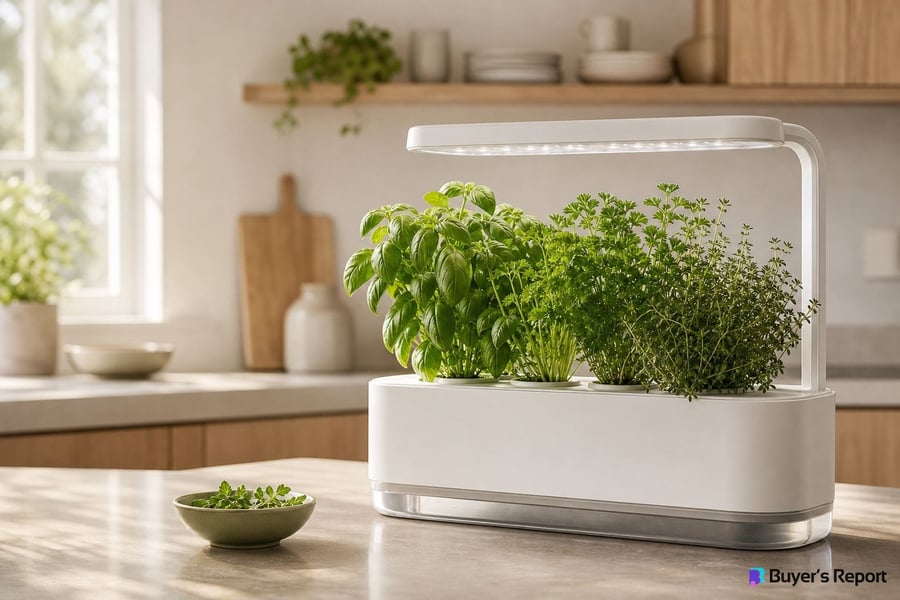
Fresh herbs can transform everyday cooking, but grocery store bundles wilt within days, and outdoor gardens aren't an option for most apartment dwellers or year-round growers. A countertop indoor herb garden solves that problem by bringing a self-contained growing environment directly into your kitchen — no yard, no guesswork, and no more throwing out half a bunch of cilantro you barely touched. Whether you're drawn to a plug-in hydroponic system with automated lighting or a simple soil-based planter, the right setup depends on how much counter space you have, which herbs you actually cook with, and how hands-on you want the experience to be. This guide walks you through everything you need to compare systems confidently before you buy.
Who Should Consider an Indoor Herb Garden?
Indoor herb gardens aren't just for dedicated gardeners — they're genuinely practical for a wide range of households. If any of the following describes you, a countertop growing system is worth serious consideration.
- Frequent home cooks: If you reach for fresh basil, thyme, or parsley multiple times a week, growing your own means snipping exactly what you need rather than buying oversized bundles that go to waste.
- Apartment dwellers: No balcony, no garden plot, no problem. Compact countertop systems are designed specifically for small kitchens and require nothing beyond a power outlet and a bit of counter real estate.
- Beginner gardeners: Hydroponic pod systems in particular handle much of the complexity for you — pre-measured nutrients, timed lighting, and self-watering reservoirs mean there's very little that can go wrong if you follow the setup instructions.
- Sustainability-minded households: Growing your own herbs eliminates the plastic clamshells and food miles that come with packaged supermarket herbs, which adds up meaningfully over a full year of cooking.
- Gift buyers: A well-chosen indoor herb garden is a practical, lifestyle-oriented gift that suits home cooks, new homeowners, and curious beginners alike — especially when paired with starter pods or a nutrient kit.
Growing Methods: Hydroponic, Aeroponic, Soil-Based, and Beyond
The growing method you choose shapes everything from daily maintenance to how quickly you'll be harvesting. Each approach has a distinct trade-off between ease, speed, and cost, and understanding those differences upfront will help you avoid buying a system that doesn't match your lifestyle. For most indoor herb varieties, a sunny windowsill on its own won't deliver enough light to keep plants thriving, so any system relying solely on ambient daylight is a meaningful compromise compared with one that includes a dedicated grow light.
- Hydroponic pod systems: Plants grow in pre-seeded pods suspended over a water reservoir, drawing up nutrient-enriched water through their roots. These are the most beginner-friendly powered option — self-contained, low-mess, and often paired with automated lighting and watering schedules.
- Soil-based planter kits: Traditional potting mix in planters, sometimes sold with an optional clip-on grow light. They feel familiar, work well for Mediterranean herbs like rosemary and thyme that prefer drier conditions, and tend to have lower upfront costs — though watering is entirely manual.
- Aeroponic systems: Roots are suspended in air and misted with nutrient solution at timed intervals, which can accelerate growth compared to hydroponics. The trade-off is higher mechanical complexity and more parts that require monitoring, making these better suited to growers who enjoy a more involved setup.
- Passive windowsill planters: No powered components, no ongoing electricity cost — but output is entirely dependent on your window's natural light exposure and seasonal sun angles. These work best as a supplement to a powered system rather than a standalone solution for year-round harvesting.
- Vertical or wall-mounted gardens: Multi-tier or panel-format systems that maximize growing capacity without expanding your counter footprint. Ideal for households that want to grow six or more herb varieties simultaneously, though installation requirements and wall clearance deserve attention before you commit.
Capacity, Footprint, and Light Quality
Three specs do most of the heavy lifting when you're comparing systems side by side: how many plants fit, how much counter space the unit occupies, and how well its grow light actually supports herb growth. Getting these right means your system will realistically fit your kitchen and reliably produce the herbs you cook with most.
- Pod or plant capacity: Most compact countertop systems hold between three and nine pods simultaneously. A solo cook who mainly uses basil and mint can do well with a three- to five-pod unit, while households cooking diverse cuisines will benefit from nine or more slots to keep several varieties growing at once. Check whether the system lets you run pods on independent schedules, since fast growers like basil will outpace slower herbs if managed as a single batch.
- System footprint: Measure your available counter space before browsing, including clearance above the unit for the light arm. Most compact models run roughly 10–11 inches wide and 6–7 inches deep at the base, but the adjustable light arm can push total height to 24 inches or more at full extension — a critical number if you have low cabinets.
- Grow light type and spectrum: Full-spectrum LEDs that span both the blue (400–500 nm) and red (600–700 nm) wavelengths are what you want for culinary herbs. Look for systems that specify PPF or PPFD output rather than just wattage — higher PPFD values (ideally above 200 µmol/m²/s at the canopy) indicate the light is genuinely intense enough to support leafy herb growth, not just decorative ambiance. Color temperatures in the 4000–6500K range are a reasonable proxy for full-spectrum coverage when PPFD data isn't published.
- Adjustable light height: Herbs grow fast, and a fixed-height light arm that works for seedlings may be too close or too far for mature plants. A telescoping or notched-height arm lets you maintain the right distance from the canopy throughout the plant's lifecycle — look for at least three height positions and a maximum clearance of 20 inches or more.
Key Features to Look For
Beyond the core specs, a handful of convenience and automation features separate systems that fit seamlessly into a busy kitchen from ones that quietly become a chore. Prioritize based on how much daily attention you're realistically willing to give.
- Auto light timer: A built-in timer that runs the grow light on a consistent 14–16 hour cycle removes one of the most common reasons herbs underperform indoors. Systems with pre-programmed cycles are more beginner-friendly; adjustable timers give experienced growers more control.
- Self-watering reservoir: A visible water level window or indicator light is the minimum to look for — it tells you at a glance when to refill without lifting or inspecting the unit. Larger reservoirs (one liter or more) extend the interval between refills, which matters if you travel or have a hectic schedule.
- App connectivity: Some systems offer companion apps with planting reminders, grow stage tracking, and light schedule customization. This is a nice-to-have rather than a must, but for beginner growers it can meaningfully reduce the learning curve.
- Pump noise level: Hydroponic systems circulate water with a small pump, and noise levels vary considerably. If your kitchen is open to a living space or you're a light sleeper, check whether the manufacturer publishes a decibel rating or whether user reviews flag pump noise as an issue.
- Lid or dome for germination: A clear humidity dome that fits over the pod tray during the germination phase can meaningfully improve sprout rates. Not all systems include one, so check the package contents carefully.
Ongoing Costs and Safety Considerations
The sticker price of an indoor herb garden is only part of the total investment. Before you buy, it's worth understanding what you'll spend to keep the system running — and what safety details to check on the spec sheet.
- Replacement pod costs: Pre-seeded pod kits are the primary consumable for hydroponic systems. Pods are typically sold in packs and can range from a few dollars to well over a dollar per pod depending on the variety and supplier. Check whether third-party pods are compatible with your system, since some manufacturers use proprietary formats that lock you into their own supply.
- Nutrient solution: Hydroponic systems require a liquid or tablet nutrient supplement added to the water reservoir. These are inexpensive individually but become a recurring line item — factor in roughly one bottle every one to two months depending on reservoir size and refill frequency. Mix and store these solutions according to the package directions that come with them.
- Grow light lifespan: LED grow lights are long-lasting, but check whether the manufacturer sells replacement bulbs or light panels separately. A system with a non-replaceable integrated LED becomes a full-unit replacement when the light eventually dims.
- Electrical safety: These are plug-in appliances that sit next to an open water reservoir, so a stable outlet connection and good separation between the water tank and the electrical components matter. Look for units with a cord length that reaches your outlet without straining, and check that the system carries standard safety certification markings.
- Warranty and build quality: Look for at least a one-year warranty and check whether the pump and reservoir are covered. Plastic reservoir quality varies — BPA-free materials are worth confirming if you're growing herbs that will go directly into food.
Keep in mind that results will vary based on growing conditions, water quality, and care habits, so treat any grow times or yield estimates you see in marketing materials as directional rather than guaranteed.
Bottom Line
An indoor herb garden earns its counter space when the growing method, capacity, and lighting match how you actually cook and how much attention you're willing to give. For most home cooks, a mid-capacity hydroponic pod system with a full-spectrum LED and an auto timer hits the right balance of simplicity and performance. If you cook with a wide variety of fresh herbs or have more counter room to work with, a larger-capacity or vertical system opens up more variety without adding much complexity. Nail down your counter dimensions, decide how hands-on you want to be, and check the ongoing consumable costs before you commit — those three factors will point you directly to the right system.

 LetPot
 LetPot
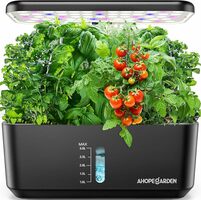 Ahopegarden
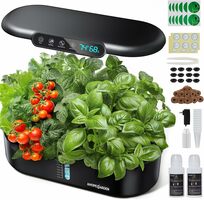 Ahopegarden
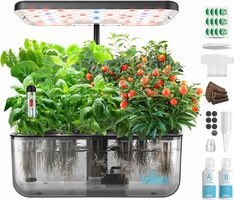 iDOO
iDOO