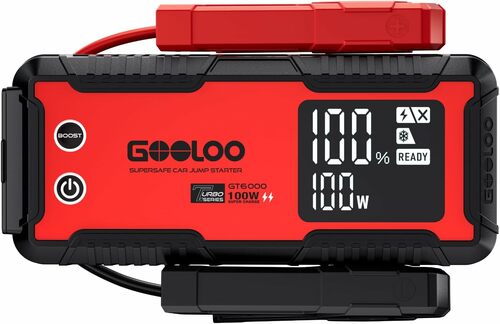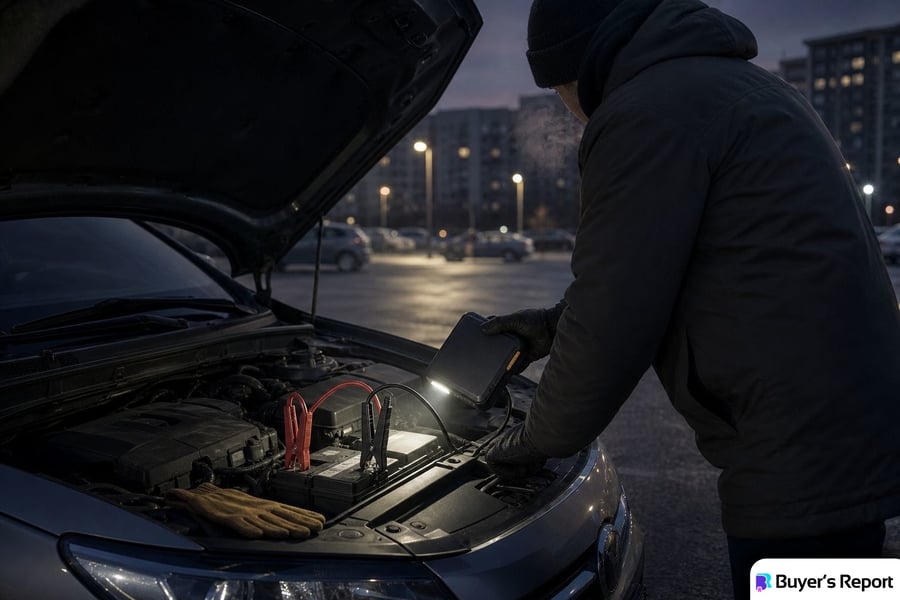
A dead battery doesn't wait for a convenient moment — it happens in parking lots, on dark highways, and in freezing weather when you least want to be stranded. A portable jump starter lets you get back on the road without flagging down a stranger or waiting on roadside assistance, and the right one can handle everything from a compact commuter car to a heavy-duty diesel truck. But with a wide range of sizes, battery technologies, and feature sets on the market, choosing the wrong unit means carrying false confidence — a jump starter that looks capable on the shelf but can't deliver when it counts. This guide walks you through the specs and features that actually matter so you can buy with confidence.
Who Should Buy a Jump Starter?
A jump starter is worth considering for almost any driver, but a few situations make one genuinely essential rather than just convenient. If any of these sound familiar, it belongs in your vehicle:
- Everyday commuters: If you drive a personal car and don't want to rely on a stranger or a subscription roadside service, a compact lithium-ion unit that fits in the glovebox is an easy, low-cost insurance policy.
- Truck, SUV, and diesel owners: Larger engines — especially diesels — require significantly more cranking power than a standard gas four-cylinder. You'll need a unit with a higher peak-amp rating, and not every jump starter on the market qualifies.
- Boaters and powersports enthusiasts: Motorcycles, ATVs, and boats often sit unused for weeks or months, which drains batteries. A compact jump starter stowed in a gear bag or storage compartment means you're covered wherever you ride or launch.
- Off-grid adventurers: If you camp or travel in remote areas where help is far away, a hybrid jump starter with USB power bank capability doubles as a backup power source for devices — a worthwhile multi-tool for the trunk or pack.
- Fleet and roadside professionals: High-duty-cycle use and frequent large-engine starts favor sealed lead-acid booster packs, which handle repeated heavy draws better than compact lithium units.
Types of Jump Starters
Jump starters come in several form factors, and the right one depends on how you'll use it and what you'll store it in. Understanding the differences saves you from buying something too small — or more than you need.
- Compact lithium-ion mini: Roughly the size of a thick smartphone and weighing about a pound, these slip into a glovebox without a second thought. They're ideal for everyday passenger vehicles and are the most popular choice for personal use, though their smaller battery capacity means fewer jump attempts per charge and more sensitivity to extreme cold.
- Sealed lead-acid booster pack: Larger, heavier, and typically trunk-stored, these are built for sustained heavy-duty use. Fleet managers and commercial operators often prefer them because they handle repeated starts on large engines and hold a charge more predictably over long storage periods.
- Jump starter with air compressor: A practical two-in-one for drivers who want to handle a low tire alongside a dead battery. The compressor adds size and weight, so it's best suited to a trunk rather than a glovebox.
- Portable power station hybrid: The largest form factor in this category, these combine jump-starting capability with a high-capacity battery that can charge laptops, run small appliances, or power devices at a campsite. They're a strong choice for off-grid adventurers who want one piece of gear to handle multiple emergencies.
- USB power bank with flashlight: The most minimal upgrade over a plain jump starter, these add a flashlight, SOS strobe, and USB ports for charging phones. Good for everyday commuters who want the lightest, most packable option with a bit of extra utility.
Matching Peak Amps to Your Vehicle
Peak amps is the headline spec you'll see on every jump starter box, and it's the most important number to get right before you buy. It represents the burst of starting power the unit delivers to your battery — but matching that number to your engine is what actually determines whether the unit will work for you. Always follow the manufacturer's recommended peak-amp range for your specific engine size and type. Keep in mind that peak-amp ratings aren't measured the same way by every brand, so treat them as a rough comparison tool rather than an apples-to-apples spec. A general framework when comparing options:
- Small gas engines (4-cylinder): Compact cars, motorcycles, and small SUVs typically fall in the 150–400 peak-amp range. Most modern lithium mini starters exceed this comfortably, so focus more on safety features and portability at this tier.
- Mid-size gas engines (6-cylinder): Trucks, larger SUVs, and performance vehicles generally need 400–600 peak amps. Verify the unit's rated output covers this range before assuming a compact model will suffice.
- Large gas and light diesel engines (V8 and up): Full-size pickup trucks, SUVs, and light-duty diesels commonly require 700–1,000+ peak amps. Not all consumer-grade jump starters reach this tier — check carefully.
- Heavy-duty diesel engines: Commercial trucks and large diesel vehicles can require 1,500–3,000 peak amps or more. This typically points to a sealed lead-acid booster pack rather than a compact lithium unit, since sustained output is better suited to the repeated, heavy cranking these engines demand.
One important caveat: manufacturer peak-amp claims are often measured under ideal conditions, and real-world performance — especially in cold weather — may differ from the rated spec. Build in a comfortable margin above your engine's minimum requirement rather than buying right at the line.
Lithium-Ion vs. Lead-Acid
The battery technology inside a jump starter shapes almost every practical trade-off — weight, cold-weather reliability, shelf life, and cost. Neither option is universally better; the right choice depends on where and how you'll use it.
- Lithium-ion advantages: Dramatically lighter and more compact than lead-acid, lithium units hold a charge for months without needing to be topped off as frequently, and they deliver power quickly. For everyday drivers who want something in the glovebox and rarely think about it, lithium is the practical default.
- Lithium cold-weather limits: Lithium-ion units can lose capacity in extreme cold — verify cold-weather ratings before buying if you live in a cold climate. A unit rated at a given peak-amp figure at room temperature won't necessarily deliver the same output in sub-zero conditions, so look for models that publish a verified cold-temperature output, not just the room-temperature peak.
- Lead-acid advantages: Sealed lead-acid packs are heavier and bulkier but deliver consistent, sustained power that handles large engines and repeated starts well. They're less sensitive to cold-temperature performance drops and tend to cost less per unit of raw cranking power — which is why fleet operators favor them.
- Lead-acid trade-offs: Expect more bulk, more weight, and a greater need to keep the unit charged on a regular maintenance schedule. They're not a glovebox item — plan for trunk storage and a periodic charge.
Safety Features to Verify Before Buying
Safety features on a jump starter aren't marketing extras — they're the difference between a smooth jump-start and a dangerous electrical fault. Before you finalize a purchase, confirm the following protections are listed in the product specifications, not just implied in the marketing copy.
- Reverse-polarity protection: Reverse-polarity protection and spark-proof clamps are essential safety features, not optional extras. If you connect the clamps incorrectly — easy to do in a dark parking lot — reverse-polarity protection prevents current from flowing until the connection is corrected, protecting both your vehicle and the jump starter.
- Spark-proof clamps: Sparks near a battery can ignite hydrogen gas produced during charging. Spark-proof clamp technology suppresses this risk at the moment of connection. Verify it's listed explicitly, not just described vaguely as "safe."
- Over-current and short-circuit protection: These prevent a wiring fault or a deeply discharged battery from drawing more current than the unit can safely supply, protecting internal components and reducing fire risk.
- Over-charge and over-discharge protection: For lithium-ion units in particular, battery management circuitry that prevents over-charging during storage and over-discharging during use extends the unit's usable life.
- Cable length and clamp build quality: Short or flimsy cables make it difficult to reach terminals in tight engine bays. Look for cables long enough to reach across a typical hood without strain, and clamps with solid metal jaws and insulated handles.
Care, Storage, and When to Replace the Battery
A jump starter only helps if it's ready when you need it. Store the unit charged and check the charge level every few months so it's ready when needed — lithium units in particular will slowly self-discharge in storage, and a unit that sat in the glovebox all summer may not have the juice to crank a cold engine in January.
It's also worth being honest about what a jump starter is and isn't. A jump starter is not a substitute for a failing or end-of-life vehicle battery — if you're jumping the same car repeatedly, the battery itself should be tested and replaced as needed. Repeated jumps mask a deeper problem and put extra strain on your alternator and starter.
Bottom Line
A jump starter is one of those purchases you hope you never need — and are glad you made when you do. The key is matching the unit to your actual vehicle: get the peak-amp rating in the right ballpark for your engine, choose lithium-ion for portability or lead-acid for heavy-duty sustained use, and pay close attention to cold-weather performance if you live somewhere winters get severe. Safety features like reverse-polarity protection and spark-proof clamps should be non-negotiable on any unit you consider. Get those fundamentals right, and the secondary features — USB ports, flashlight, air compressor — become easy additions rather than distractions from what matters most.

 GOOLOO
 ETENWOLF
 WOLFBOX
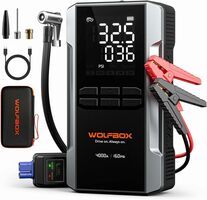 WOLFBOX
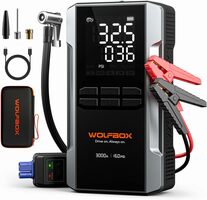 WOLFBOX