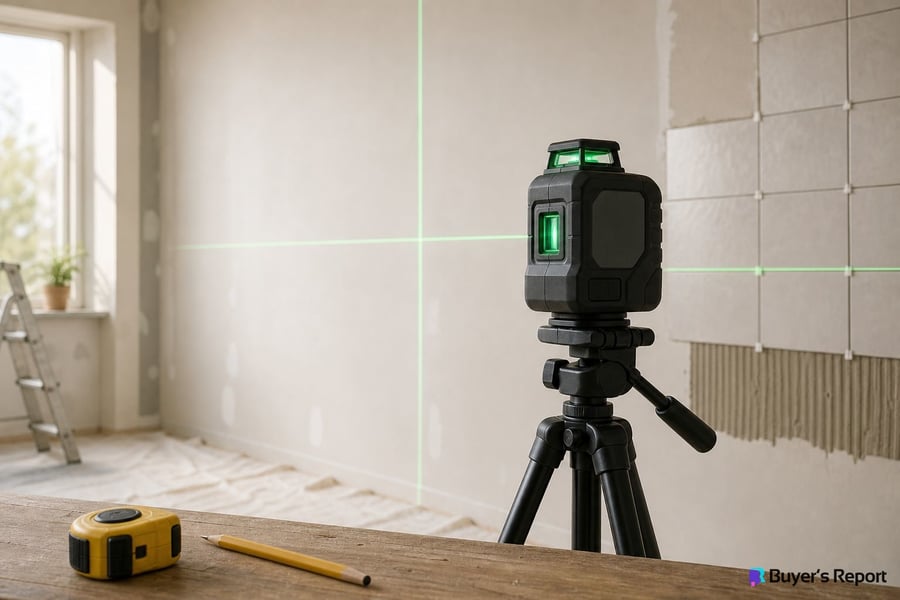
A crooked shelf, a tile layout that drifts off-center by the third row, or a drop ceiling that's visibly lower on one side — these are the kinds of mistakes that happen when you rely on a standard bubble level for jobs that demand more precision. Laser levels solve that problem by projecting a level or plumb reference line across a wall, floor, or entire job site, giving you a hands-free guide you can work against continuously. The category has expanded well beyond the simple cross-line tool most people picture: today's market covers everything from pocket-sized dot lasers for hanging pictures to self-leveling rotary units that can lay out an entire building foundation. This guide walks you through how to match the right laser type, accuracy class, and feature set to your specific tasks — whether you're a weekend DIYer or a working contractor.
Who Should Buy a Laser Level?
A tape measure and a traditional bubble level handle plenty of tasks, but once your work spans multiple walls, long runs, or requires a reference you can step away from and return to, a laser level starts paying for itself quickly. The question isn't really whether you'd benefit from one — it's which type makes sense for what you actually build or install.
- Casual DIYers: If you hang pictures, mount shelves, or install a ceiling fan a few times a year, a basic cross-line laser at a modest price point is all you need. Self-leveling models in this tier are easy to set up and accurate enough for most work inside a single room.
- Home Renovators: Tiling a bathroom floor, installing a drop ceiling, or running a long stretch of cabinetry requires a consistent reference across a wider area. Look for a multi-line or 360° laser that can project onto multiple planes simultaneously so you're not repositioning constantly.
- Electricians and Plumbers: Outlet alignment, pipe runs, and conduit layout benefit from a combination of horizontal and vertical lines — or a dot laser for transferring points between floor and ceiling. Accuracy in the ±1/16-inch range matters here more than raw range.
- General Contractors and Framers: Large-area layout, site leveling, and setting grades across long distances call for a rotary laser paired with a receiver. These jobs push beyond what a standard cross-line tool can cover, both in range and in outdoor ambient-light conditions.
- Finish Carpenters: Trim, tile, and cabinetry work demands the tightest tolerances on the list. Prioritize a unit with a published accuracy specification in the ±1/16-inch or better range and a stable, vibration-resistant self-leveling mechanism. No laser is truly error-free, so confirm the spec at your real working distance rather than assuming the headline number.
Types of Laser Levels
Laser level type is the single most important decision you'll make before looking at any other spec. Buying the wrong type — even a high-quality one — means you'll either have more tool than you need or a tool that simply can't do the job. Here's how the main categories break down by use case.
- Cross-Line / Multi-Line: Projects one horizontal and one vertical line (or both simultaneously), making it the most versatile choice for indoor room-scale work. Ideal for tiling, backsplashes, shelving, and cabinet installation. Most consumer models fall here.
- 360° / Plane Lasers: Sweeps a full horizontal or vertical plane around the entire room rather than projecting a single line segment. This is the go-to for drop ceilings, flooring, and any task where you need a consistent reference on all four walls at once.
- Rotary Lasers: A spinning mirror throws a beam in a full 360° circle, often at ranges exceeding 100 feet — and substantially farther when paired with a compatible receiver. These are the professional standard for site leveling, grading, and large-area layout. They're larger, heavier, and more expensive than any other type.
- Dot / Point Lasers: Projects individual reference points — typically plumb up, plumb down, and sometimes horizontal — rather than lines. Best for transferring a point from floor to ceiling (for recessed lighting, for example) or aligning vertically stacked elements like outlets on multiple floors.
- Combination Stud-Finder + Laser: Merges a stud finder with a basic cross-line laser. Convenient for picture hanging and light shelf work, but accuracy and range are usually modest. A reasonable all-in-one for homeowners who want fewer tools; less suited to renovation or trade work.
Accuracy, Range, and Reading the Specs
Accuracy specs are stated at a specific distance — typically 33 feet — and deviation grows with range. A unit rated at ±1/8 inch at 33 feet may be off by ±1/4 inch or more at 66 feet, so match the spec to your longest realistic working distance, not just the closest wall. Results and usable range also vary with ambient light, surface reflectivity, and temperature, which is why numbers measured under controlled conditions won't always match real job-site performance.
- ±1/8 Inch at 33 ft: Entry-level accuracy that covers most DIY applications — picture hanging, basic shelving, and simple tile layouts where small cumulative error won't be visible. Budget tools in this range generally aren't built to professional finish tolerances, so don't rely on them for cabinetry or finish work that runs longer than 20 feet without verifying performance.
- ±1/16 Inch at 33 ft: Mid-range accuracy suited to home renovation tasks like drop ceilings, flooring, and cabinet runs. This is the minimum you should look for if you're doing finish work or trade tasks that compound over a long layout.
- ±1/32 Inch or Better: Professional-grade tolerance for finish carpentry, precision tile work, and cabinetry. You'll find this spec on higher-end tools; always verify the accuracy at your actual working distance before assuming it meets your project tolerance.
- Self-Leveling Range: Expressed in degrees (commonly ±3° to ±5°), this tells you how far out of level you can place the tool before it stops compensating automatically. On uneven floors or when mounting to a non-plumb surface, a wider range gives you more flexibility. Always verify the unit has finished self-leveling before taking a reference measurement — most models signal readiness with a steady beam or an audible tone.
Beam Color, Range, and Outdoor Use
Two practical variables — beam color and whether you're working indoors or out — have a bigger impact on day-to-day usability than most buyers expect. Getting these wrong means fighting to see your reference line under the very conditions you're working in.
- Red vs. Green Beam: Green beams are significantly more visible to the human eye in bright indoor conditions, which matters when you're working near windows or under shop lighting. Red beam tools are typically less expensive and have longer battery life; they're a solid choice in dim indoor environments where cost is a priority.
- Indoor Range Limits: Most cross-line and 360° lasers are rated for 30–100 feet under normal indoor light. That's sufficient for rooms and open floor plans, but the beam washes out in bright conditions well before the rated distance.
- Outdoor and Bright-Light Use: In direct sunlight or on open job sites, even a green beam becomes nearly invisible to the naked eye — a detector or receiver is typically required to work reliably outdoors. Rotary lasers paired with a compatible electronic receiver let you detect the beam accurately at significant distances regardless of ambient light, which is the standard approach for exterior grading and site layout. Look for pulse mode on the laser if you plan to use a receiver, as not all cross-line tools support it.
- IP Rating: An IP54 rating (dust protected, splash resistant) is adequate for covered outdoor work and light rain. If the tool will regularly be exposed to mud, heavy rain, or a dusty framing site, look for IP65 or higher. Indoor-only tools often carry no IP rating — fine for a climate-controlled shop, but not a job site.
Key Features to Look For Before You Buy
Once you've settled on type and accuracy class, the remaining feature decisions come down to how the tool fits into your workflow. These details separate a laser you'll reach for every day from one that sits in a drawer.
- Mounting Options: A magnetic base lets the tool attach directly to metal studs, door frames, and brackets — a genuine time-saver on renovation work. A standard 1/4-20 tripod thread opens compatibility with most photography and surveying tripods for hands-free positioning at any height. Universal clamps add versatility when neither option is convenient.
- Manual Mode: Some jobs require a deliberately non-level line — a staircase stringer, a raked ceiling, a sloped tile run. Manual mode lets you lock the laser at any angle you choose, overriding the self-leveling mechanism. Not every model includes it; check before you buy if your work involves any angled layouts.
- Battery Platform: Tools that accept AA or AAA batteries are immediately usable anywhere and cost nothing extra if you already stock them. Models on a cordless power-tool battery platform offer longer runtime and eliminate proprietary charging, but only make sense if you already own batteries in that voltage. Check rated runtime per charge, especially for rotary models used in full-day site work.
- Receiver Compatibility: If there's any chance you'll take the tool outdoors or into a large open space, confirm it ships with or is compatible with a grade rod receiver. Not all lasers support pulse mode, which is required for receiver use — this detail is worth checking in the spec sheet, not assuming.
- Out-of-Level Alert: Better models flash the beam or sound a tone when the tool has been bumped beyond its self-leveling range, warning you that the reference is no longer valid. This is easy to overlook on a spec sheet but genuinely important on busy job sites.
Safety and Long-Term Cost Considerations
Before finalizing your choice, a few purchase-relevant safety and cost factors are worth checking on the spec sheet rather than discovering after the fact. Never aim a laser beam at eyes — laser levels emit Class 2 or Class 3R laser radiation, and while brief accidental exposure at Class 2 is generally considered low risk, higher-class tools warrant additional caution around other people on the job site. Look for the class rating on the spec sheet and handle accordingly.
- Warranty Length: Professional-grade tools typically carry a two- to five-year warranty; consumer tools often offer one year. A longer warranty signals manufacturer confidence in build quality and matters more for tools that will see daily job-site use.
- Calibration Services: Even a well-built laser can drift out of spec after a drop or significant temperature shock. Check whether the manufacturer offers factory recalibration and what that costs — for a tool you rely on professionally, this is a real ongoing expense to factor in.
- Replacement Accessories: Targets, grade rods, and receivers are often sold separately and vary in price. If a receiver is critical to your use case, verify one is available and price it before committing to the base tool.
- Build Quality Signals: Rubber over-molding, a protective carry case, and a stated drop-rating (many tools are rated for a 1-meter drop) all indicate a unit built for field use rather than occasional home tasks. If the tool is going on a job site, these aren't optional niceties.
Bottom Line
The right laser level is the one that matches your actual tasks — not the most feature-packed model on the shelf, and not one that underdelivers on accuracy for the tolerance your work demands. Start with laser type (cross-line for room-scale indoor work, rotary for large exterior sites, dot for point transfer), then confirm the accuracy spec holds up at your real working distance, and choose a beam color and IP rating that suit your environment. Casual DIYers can get strong results from an affordable self-leveling cross-line tool; tradespeople doing daily site work should invest in professional-grade accuracy, outdoor receiver compatibility, and a durable build that can absorb job-site conditions. Get those fundamentals right, and every line you pull will give you a reference you can work to with confidence.

 DOVOH
DOVOH
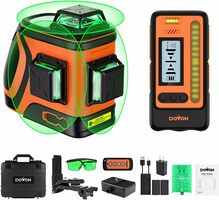 DOVOH
DOVOH
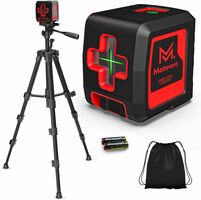 Motovera
 LASGOO