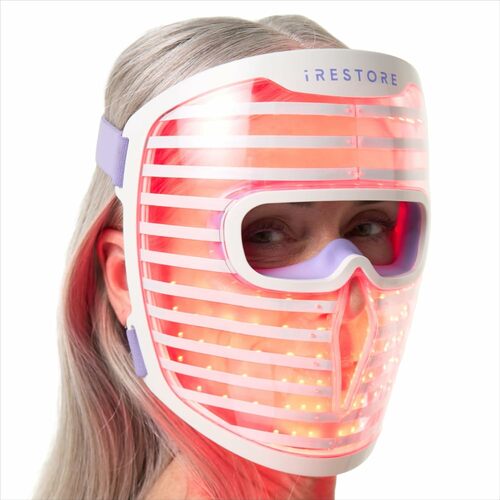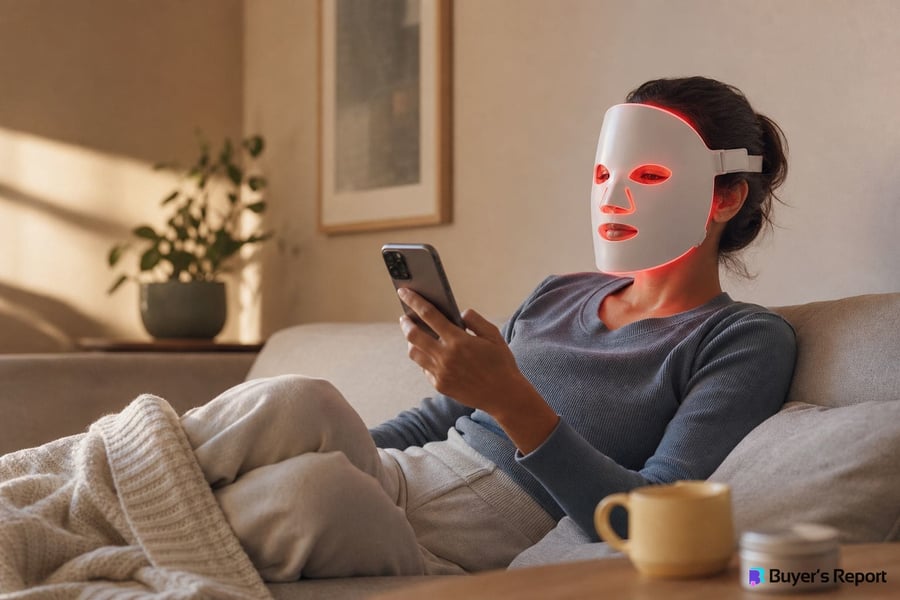
LED light therapy masks have moved from professional treatment rooms into everyday skincare routines, offering a hands-free way to deliver targeted wavelengths of light to the face in sessions that typically last just a few minutes. The appeal is straightforward: clinical research suggests that specific light wavelengths may support collagen production, help manage inflammatory acne, and improve overall skin texture — without needles, downtime, or prescription products. But the at-home market is crowded with devices that vary enormously in technical quality, and a mask that looks impressive on the outside may deliver little more than a dim, underpowered glow. This guide walks you through what actually matters when comparing masks — from wavelength transparency to regulatory clearance — so you can shop with confidence.
Who Is a Light Therapy Mask For?
Light therapy masks suit a fairly wide range of skin goals, but they're not a universal solution. Understanding where they genuinely add value — and where they fall short — will help you decide whether one belongs in your routine. It’s also important to remember that hese devices are not intended to diagnose, treat, cure, or prevent any disease or medical condition, and they work best as one piece of a broader skincare routine.
- Anti-aging and rejuvenation: If you're focused on fine lines, uneven texture, or loss of firmness, red and near-infrared wavelengths have the strongest clinical backing for collagen support. Consistent use over several weeks may contribute to visible improvement, but results vary from person to person, and individual skin response depends on skin type, consistency of use, device quality, and underlying conditions.
- Acne-prone skin: Blue light may target acne-related bacteria on the skin's surface, making these masks a drug-free adjunct for managing inflammatory breakouts. Combined blue and red modes are worth seeking out, since red light may also help calm post-acne inflammation.
- Post-procedure maintenance: Low-level light therapy is often used alongside in-office treatments. If you've recently had professional facials or other aesthetic procedures, a mask can support your at-home routine — though it isn't a substitute for clinical-grade care and shouldn't be positioned as equivalent to laser resurfacing, prescription photodynamic therapy, or other in-office photobiomodulation.
- Busy, efficiency-focused users: The hands-free, wearable format means you can use a mask while doing other things. Sessions typically run three to twenty minutes, which makes it easy to build into a daily or weekly rhythm.
Types of Light Therapy Masks
The format of the mask affects how consistently light reaches your skin, and the wavelength configuration determines which skin concerns you can address. Both decisions matter at the point of purchase.
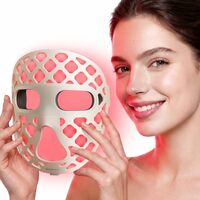
- Rigid hard-shell masks: These use a fixed plastic frame with LEDs arranged in a grid. They're generally durable and widely available, but the one-size design can leave gaps at the nose bridge, under-eye area, and jawline — meaning some parts of your face receive less light than others.
- Flexible silicone masks: Soft, contour-hugging designs sit closer to the skin across varied facial anatomy, which tends to produce more even light delivery. If consistent full-face coverage is a priority, flexible construction is worth the typically higher price.
- Single-wavelength masks: These emit one color, most commonly red. They're simpler and less expensive, but they limit you to one use case. If your needs ever expand — say, you want to add acne-targeting blue light — you'd need a second device.
- Multi-wavelength masks: Combining two or more wavelengths (commonly red plus near-infrared, or red plus blue plus near-infrared) with selectable modes gives you flexibility across different skin concerns. Red and near-infrared have the strongest clinical evidence; blue adds acne-targeting value. Additional colors like green, amber, or yellow have weaker supporting evidence and shouldn't be the primary reason you choose a mask. Be skeptical of marketing around "pink," "purple," or "white" modes — these are simply combinations of standard wavelengths rather than distinct therapeutic colors.
- Hybrid combination masks: Some masks layer LED therapy with radio frequency, EMS, microcurrent, or vibration. These carry additional contraindications well beyond those of a pure LED device, and the added complexity increases cost. Unless you specifically want those secondary modalities, a pure LED mask is lower risk and easier to evaluate.
Wavelengths, Irradiance, and Dose Explained
Three numbers tell you whether a mask is likely to deliver a meaningful session — and whether a brand is being transparent with you. If any of these figures are missing from the spec sheet, treat that as a warning sign.
- Wavelength (nm): The nanometer value tells you how deep into the skin a given wavelength penetrates and what cellular effect it targets. Red light in the 630–660 nm range is most studied for collagen support; near-infrared at 800–850 nm penetrates deeper into tissue; blue at 415–465 nm addresses surface-level acne bacteria. A brand that lists only a color name — "red" or "blue" — without a specific nm value is giving you marketing, not a specification.
- Irradiance (mW/cm²): This is the power density delivered to the skin surface. Without knowing irradiance, you can't calculate the actual energy your skin receives during a session, which makes it impossible to evaluate whether the device is working at a meaningful level. For home devices, look for transparent disclosure in the 40–100 mW/cm² range — and be skeptical of any device that omits this number entirely.
- Energy dose / fluence (J/cm²): Multiply irradiance by session time in seconds, then divide by 1,000, and you get the energy dose delivered per session. The evidence-supported window for facial use is generally cited at 5–20 J/cm² per session. A higher-irradiance device can reach that window in a shorter session; a lower-powered device requires more time. Knowing all three numbers lets you compare masks meaningfully — far more usefully than counting LEDs, since LED count alone tells you nothing about actual power output or delivered dose.
Key Features to Look For
Once you understand the core specs, a handful of practical features separate masks worth buying from those worth skipping.
- Wavelength transparency: The brand should clearly state the specific nm value for each LED color. Vague claims like "uses red and blue LEDs" without numeric disclosure make independent verification impossible.
- Irradiance disclosure: mW/cm² should appear on the spec sheet or product page — not just in a FAQ or buried in small print. If a brand doesn't publish this number, you have no way to verify its performance claims.
- Facial coverage and fit: Consider your own facial anatomy. Rigid masks work adequately for many people, but if you have a narrower or broader face, or find that standard mask shapes sit unevenly, a flexible silicone design will provide more consistent contact and more uniform light delivery.
- Selectable modes: Multi-wavelength masks should let you choose which wavelengths to activate per session. A fixed combination that always runs all colors simultaneously gives you less control and may not suit every skin goal.
- Session timer: Built-in auto-shutoff at the end of a preset session prevents over-exposure and removes any guesswork from dosing.
Safety, Compliance, and Who Should Check With a Clinician First
Light therapy masks are regulated devices, and safety verification should happen before purchase — not after the box arrives. These devices are not FDA-approved drugs or prescription medical devices; the relevant regulatory benchmark for Class II home-use devices is FDA 510(k) clearance, which indicates the device has undergone premarket review for safety and substantial equivalence to a legally marketed predicate device. Clearance isn't a guarantee of efficacy, but its absence means no independent safety review has taken place — and that matters for a device you'll be wearing over your face.
- FDA 510(k) clearance: Verify the device's clearance status directly on the FDA's 510(k) database, not just from the brand's marketing materials. Any brand claiming their mask is "FDA approved" is using incorrect terminology — that phrasing is a regulatory red flag, since the correct term for a Class II home device is "FDA cleared."
- Eye protection: Eye protection matters — always follow the manufacturer's guidance on whether the device requires separate goggles, includes built-in opaque eye shields, or uses engineered LED-free eye-area cutouts. Direct, prolonged LED exposure to unprotected eyes warrants serious caution.
- Hybrid modality contraindications: Masks that combine LED with RF, EMS, or microcurrent carry additional contraindications beyond pure LED devices. If you have an implanted electronic device such as a pacemaker, you should avoid these hybrid units entirely.
- Photosensitivity and medication interactions: If you take photosensitizing medications — including certain antibiotics, retinoids, or diuretics — talk to your prescriber before use, as these drugs can increase your skin's sensitivity to light wavelengths.
- Medical history considerations: Anyone with a history of epilepsy or seizure disorders, active cancer, photosensitivity disorders, or systemic lupus should consult a physician before use. Anyone who is pregnant or breastfeeding should also check with a healthcare provider first, as safety data in these populations is limited. And if you have an active skin condition, are undergoing cancer treatment, or are simply unsure whether light therapy is appropriate for your situation, consult a dermatologist or qualified healthcare professional before purchasing.
Bottom Line
A well-chosen light therapy mask can be a useful addition to a skincare routine — but only if the device is built to deliver light at the right wavelengths, with enough power to matter, and with a verifiable safety record. Prioritize brands that publish specific nm values and irradiance figures openly, look for FDA 510(k) clearance as your baseline safety check, and choose a mask format that actually fits your face. Stick to red and near-infrared as your evidence-backed core wavelengths, add blue if acne is a concern, and approach hybrid combination devices with extra scrutiny. Results vary, consistency matters, and no at-home mask replicates clinical-grade treatment — but with the right device and realistic expectations, you have a solid foundation for informed use.

 iRestore
 iRestore
 Aurphany
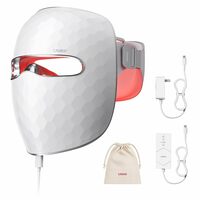 Ulike
Ulike
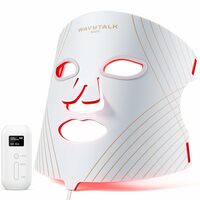 Wavytalk
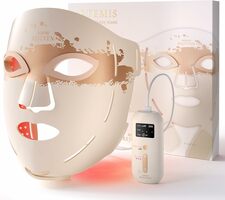 RENPHO
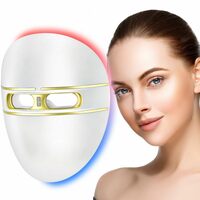 F FIWENE
 Viconor