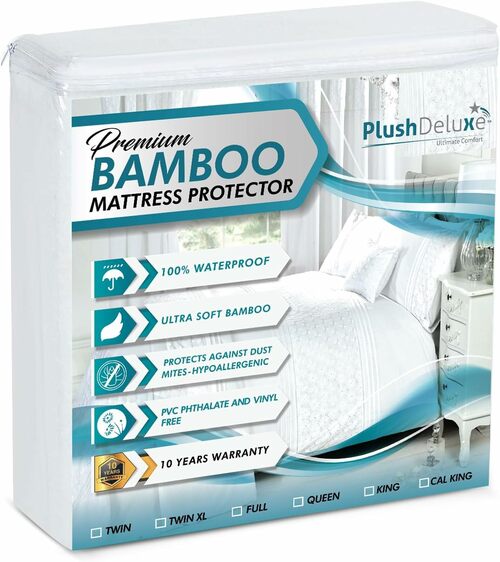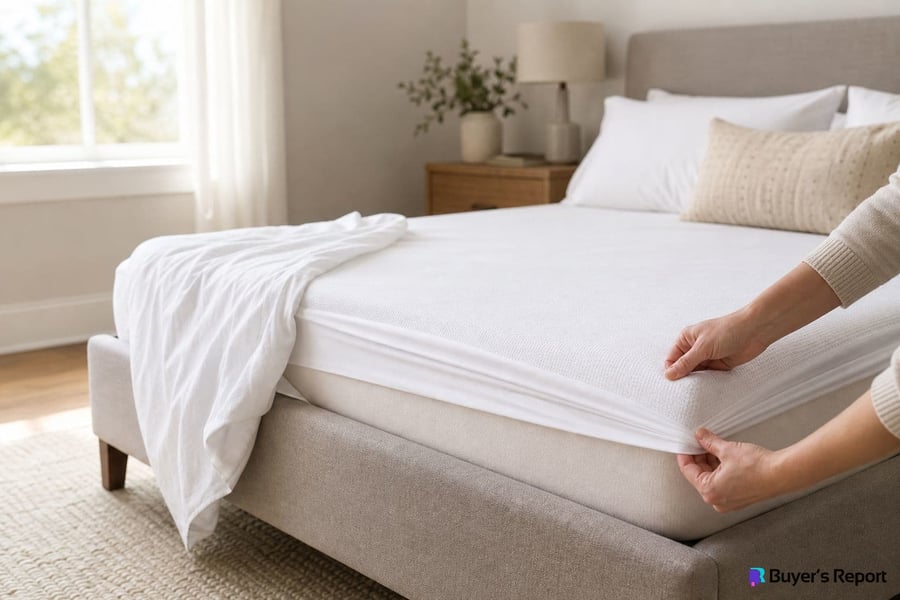
A mattress is one of the more significant purchases you'll make for your home, and yet most people leave it completely unprotected from the spills, sweat, allergens, and general wear that accumulate over years of nightly use. A mattress protector sits between your fitted sheet and your mattress, acting as the first line of defense against moisture, dust mites, pet dander, and stains that would otherwise work their way into a surface that can't simply be tossed in the wash. Available in several styles and materials — from basic fitted covers to fully zippered encasements — the right protector depends on what you're trying to guard against, how your mattress is built, and how much you value uninterrupted sleep. This guide walks you through every key decision so you can choose a protector that fits your mattress, your lifestyle, and your budget.
Who Needs a Mattress Protector?
The short answer is: almost everyone. But some situations make a protector less optional and more essential. If any of the following apply to you, a quality protector should be high on your list before your first night on a new mattress.
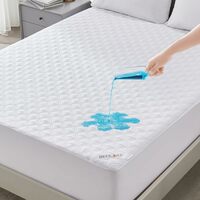
- Parents and bed-sharers: Young children and overnight guests bring a dramatically higher risk of liquid accidents. A waterproof protector is the most reliable way to keep moisture from soaking through to the foam or coils below.
- Pet owners: Pets shed dander and track in dirt, and accidents happen. A durable, machine-washable protector saves you from a mattress that's difficult to fully clean.
- Allergy sufferers: Dust mites and dander accumulate in mattress materials over time. An allergen-barrier protector can reduce contact with these irritants, though results and durability vary by product, and no protector eliminates all allergens or contaminants.
- Hot sleepers: If you wake up sweaty, a cooling-style protector can help moderate surface temperature — but only if it's designed for breathability rather than just moisture resistance.
- High-value mattress owners: Many mattress warranties are voided by staining. A protector helps preserve both the physical condition and the warranty standing of your purchase.
It's worth noting upfront: a mattress protector primarily protects the mattress — it is not a substitute for a mattress topper or pad if comfort adjustment is the goal. These are two different products.
Coverage Styles: Fitted vs. Encasement vs. Pad
The style you choose determines how much of your mattress is actually shielded and how easy the protector is to put on and take off. Each has a different sweet spot depending on your primary concern.
- Fitted (five-sided): The most common style — a waterproof or allergen-resistant top panel with an elasticized skirt that wraps around the sides like a fitted sheet. It's easy to remove for washing and works well for spill and sweat protection. The underside of the mattress remains exposed.
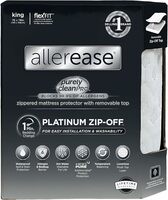
- Encasement (zippered): A six-sided cover that fully wraps and zips around the entire mattress. Encasement-style protectors offer the most comprehensive allergen barrier, including the underside of the mattress, which makes them a strong choice for dust-mite reduction, bed bug containment, or anyone with significant allergen concerns. They take more effort to put on but provide total coverage.
- Pad-style: A quilted top layer that sits on the mattress and ties or tucks at the corners. These offer minimal waterproofing and are better suited for light protection or adding a small amount of surface softness. Not ideal if spill protection is a priority.
- Cooling protectors: Fitted-style covers that use phase-change materials or moisture-wicking fabrics to reduce heat retention. Useful for hot sleepers, but verify that the waterproof layer doesn't undermine breathability before you buy.
Waterproofing: What the Barrier Type Actually Means
Not all protectors marketed as "waterproof" perform the same way, and the backing material makes a significant difference in how the protector feels and sounds under your sheets. Understanding the main barrier types helps you compare models on more than just price.
- Polyurethane (PU) membrane: A thin laminated layer bonded to the fabric backing. It's reliable at blocking liquids and is widely used at mid-range price points. Older or cheaper versions can feel slightly crinkly and generate noise when you move — worth checking reviews for before you commit, since few protectors are truly silent.
- TPU (thermoplastic polyurethane): A more advanced membrane that tends to be thinner, quieter, and more flexible than standard PU. TPU is also generally considered more breathable, which matters if you sleep warm. It typically appears in higher-priced options.
- Water-resistant (no membrane): Some protectors use tightly woven or treated fabrics that resist light moisture without a dedicated membrane. These handle minor spills but will not hold up against a full liquid accident and are not suitable for young children or heavy use.
Waterproof does not automatically mean breathable — verify the backing material and look for independent breathability claims rather than relying on marketing description alone.
Sizing and Fit: Getting the Right Match
A protector that doesn't fit securely is a protector that shifts at night, bunches under your sheets, and may not stay in place long enough to actually protect anything. Sizing is more nuanced than just matching the bed dimensions.
- Standard mattress sizes: Twin, Full, Queen, King, and California King protectors are widely available and follow standard mattress footprints. Always match the labeled size of your mattress.
- Pocket depth compatibility: Pocket depth must match the actual mattress height for a secure, non-slip fit. A standard mattress runs 8–10 inches; a pillow-top or hybrid can reach 14–18 inches or more. Check the protector's listed pocket depth — or encasement height — against your mattress's measured profile before ordering.
- Encasement zipper placement: On zippered styles, look for a zipper that runs the full length of one side and includes a zipper guard to prevent the pull from scratching you or snagging the fabric. A poorly placed or short zipper makes removal for washing far more difficult.
Key Features to Evaluate Before You Buy
Once you've identified the coverage style and barrier type that fit your needs, a few additional features separate a protector that performs for years from one you'll be replacing inside of 12 months.
- Surface fabric: Cotton terry is soft and absorbent but can add warmth. Bamboo-derived and microfiber options tend to feel cooler and smoother. The surface fabric also affects how your sheets feel on top, so consider the overall sleep feel, not just the barrier layer.
- Washability and heat tolerance: Machine-washability and heat tolerance vary; always check care label instructions, particularly if you plan to wash frequently. Some waterproof membranes degrade at high dryer temperatures, which can compromise the barrier over time.
- Warranty and trial period: Quality protectors often carry multi-year warranties on the waterproof layer. A shorter warranty or none at all can signal thinner construction. Some retailers offer sleep trials; knowing the return window matters if the noise or feel doesn't work for you.
- Material safety certifications: If chemical exposure is a concern — especially for children's beds — look for certifications such as OEKO-TEX or PFAS-free claims on the spec sheet. These are worth verifying independently rather than taking at face value from a product listing.
- Budget range: Basic fitted protectors typically run $20–$50. Premium cooling or encasement options generally fall in the $80–$150+ range. Spending more tends to buy better breathability and quieter membranes, not just brand recognition.
Bottom Line
Choosing the right mattress protector comes down to three things: knowing what you're protecting against, picking the coverage style that matches that concern, and making sure the fit and materials hold up over time. If liquid accidents are the worry, prioritize a TPU-backed fitted protector with a pocket depth matched to your mattress profile. If allergens are the issue, a fully zippered encasement is the most thorough option available. And if you sleep hot, look closely at the backing material — breathability and waterproofing can coexist, but only in protectors built specifically for it. Get the fit right, check the care instructions before you buy, and you'll have a protector that quietly does its job for years without you thinking about it.

 PlushDeluxe
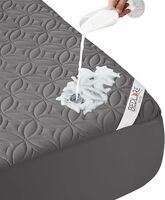 BEDLORE
 BEDLORE
 Allerease