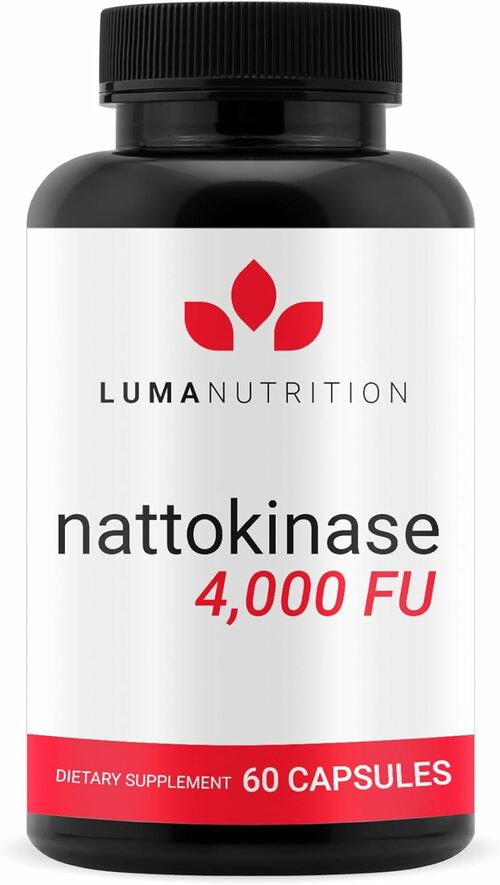
Nattokinase is an enzyme derived from natto, a traditional Japanese food made from fermented soybeans, and it has attracted growing interest among adults looking to support cardiovascular health and healthy circulation. Unlike many wellness supplements, nattokinase has a specific, well-characterized mechanism — it works by breaking down fibrin, the protein that forms the structural scaffold of blood clots. Because most people outside of Japan eat little or no natto, supplementation has become a practical way to access the enzyme. This guide covers the key buying criteria — potency measurement, fermentation source, formula type, and safety considerations — so you can evaluate options with confidence.
A quick framing note before diving in: nattokinase is a dietary supplement rather than a drug, and it has not been evaluated by the FDA to diagnose, treat, cure, or prevent any disease. Individual outcomes vary, the clinical evidence base is still developing, and specific results cannot be guaranteed.
How Nattokinase Works
Nattokinase is a fibrinolytic enzyme, meaning it acts on fibrin — the protein mesh that holds blood clots together. By helping to break down fibrin, it may support the body's natural clot-dissolving processes and healthy blood flow. The enzyme is produced during the fermentation of soybeans (or alternative substrates) by the bacterium Bacillus subtilis var. natto. Its activity is measured in Fibrinolytic Units (FU) — the standard potency measure for this enzyme, since milligram weight alone does not indicate effectiveness. That distinction is why FU is a far more meaningful number on a label than total weight.
Who Should Consider Nattokinase?
Nattokinase appeals to a specific set of health-conscious adults, and it is not a supplement suited to everyone. Understanding whether your goals and health profile are a good fit matters more here than with most supplements.
- General Cardiovascular Support: Adults interested in supporting healthy circulation and cardiovascular function as part of a broader wellness routine are the primary audience. Because the research is still maturing, it is worth approaching nattokinase with measured expectations rather than treating it as a guaranteed outcome.
- Low or No Natto Intake: People who eat little or no fermented natto — which describes most adults outside of Japan — may consider supplementation as a convenient way to access the enzyme without dietary changes.
- Soy Allergy or Sensitivity: Those who need to avoid soy can look specifically for soy-free formulas derived from alternative fermentation substrates such as chickpea. This variant was developed precisely for this audience.
- Plant-Based Consumers: Vegans and vegetarians should look for products encapsulated in vegetable-based (HPMC) capsules rather than gelatin, as both the enzyme source and the delivery format matter for dietary compatibility.
- Enzyme-Focused Supplement Users: Those already interested in systemic enzyme supplementation — whether for fibrinolytic activity or general enzyme support — will find nattokinase among the more researched options in this category.
Potency, Purity, and What to Look for on the Label
Label literacy matters more here than with most supplements, because a single number — milligrams — can be completely uninformative. Here is what actually signals quality and value when you are comparing products.
- FU Activity, Not Milligrams: Look for the FU count clearly stated per serving. Standard capsules typically deliver 2,000–4,000 FU, while high-potency powder sachets can reach around 10,800 FU. If a label shows only milligrams with no FU disclosure, treat that as a meaningful gap in transparency.
- Third-Party Testing: Independent testing verifies that the labeled FU activity is accurate and that the product is free from heavy metals, microbial contamination, and undisclosed processing agents. Look for a certificate of analysis (COA) or recognized third-party certification marks.
- cGMP Manufacturing: Current Good Manufacturing Practice certification indicates the facility follows consistent, audited production standards. This matters for enzyme supplements specifically, since manufacturing conditions directly affect enzymatic stability and activity.
- Filler and Additive Transparency: Some products use high amounts of maltodextrin or other bulking agents that may not be prominently disclosed. Review the full ingredient list, not just the supplement facts panel, and prefer products with minimal, clearly identified excipients.
- Standalone vs. Combination Formulas: Standalone nattokinase gives you precise control over your dose. Combination formulas — often paired with Vitamin K2, serrapeptase, or other cardiovascular-support ingredients — can offer convenience but make it harder to isolate which ingredient is doing what. Choose based on how targeted or broad your goals are.
- Capsule Format: Enteric-coated capsules are sometimes used to protect enzyme activity from stomach acid before the contents reach the small intestine. If you are comparing standard and enteric-coated options, this coating may be worth factoring into your decision alongside FU count.
Soy-Derived vs. Soy-Free Nattokinase
Most nattokinase on the market is produced through fermentation of soybeans, which is the traditional and most common substrate. However, soy-free versions — typically fermented on chickpea or other non-soy media — have become widely available and are an important category for certain buyers.
- Soy-Derived Products: Standard soy-derived nattokinase has the longest research history and is the baseline against which most potency standards are set. Keep in mind that soy-derived products may contain residual soy proteins, so anyone with a soy allergy should choose a verified soy-free option rather than assume a highly purified product is automatically safe.
- Soy-Free Alternatives: Soy-free nattokinase uses an alternative fermentation substrate and is appropriate for those with soy allergies or who follow soy-restricted diets. When choosing a soy-free product, look for one that explicitly states its fermentation source and carries third-party verification of its soy-free status — not just a marketing claim. Soy-free formulas are not inherently more effective than soy-derived ones; the choice is about dietary fit, not enzymatic superiority.
- Allergy Risk and Verification: Allergic reactions — including severe anaphylaxis — can occur even in individuals without a known soy allergy. If allergy risk is your reason for choosing soy-free, confirmation via a COA is important, not optional.
Safety, Interactions, and Who Should Avoid Nattokinase
Because of its blood-thinning and fibrinolytic properties, this is a supplement where the safety considerations are genuinely central to the buying decision — not a formality. It is not safe for everyone, and a medical consultation is part of the process rather than an optional add-on.
- Drug Interactions: Nattokinase has significant blood-thinning and fibrinolytic properties that can interact dangerously with anticoagulant and antiplatelet drugs such as warfarin, heparin, aspirin, clopidogrel, and apixaban. Combining it with these medications without physician supervision is not appropriate, and nattokinase is not a replacement or substitute for any prescribed blood thinner.
- Bleeding Disorders and Hemorrhagic Risk: Individuals with bleeding disorders should avoid nattokinase. Those with a history of stroke, hemorrhagic conditions, active bleeding, or mechanical heart valves should also avoid use without explicit medical guidance.
- Pre-Surgery Discontinuation: Nattokinase should be discontinued at least two weeks before any scheduled surgery or medical procedure. Discuss this timeline with your healthcare provider when planning any procedure.
- Pregnancy and Breastfeeding: Safety during pregnancy and breastfeeding has not been established; avoid use unless directed by a healthcare provider.
- When to Consult a Provider: Consult a qualified healthcare provider before use, especially if you are taking any prescription medications, managing a cardiovascular condition, or have any history of clotting or bleeding issues.
Bottom Line
Nattokinase is one of the more specifically characterized enzyme supplements available, and for the right buyer it may fit into a broader routine focused on healthy circulation and cardiovascular wellness. Choosing well comes down to treating FU activity as your primary potency benchmark, prioritizing third-party tested and cGMP-certified products, and selecting a fermentation source — soy-derived or soy-free — that matches your dietary and allergy needs. Given the fibrinolytic profile, the conversation with a healthcare provider is part of the buying process, not a step to skip. Get the potency, purity, and clearance right, and nattokinase can be a well-considered addition to a cardiovascular wellness routine.

 Luma Nutrition
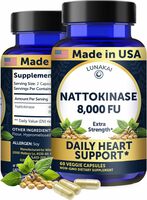 Lunakai
 Nutricost
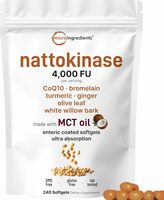 Micro Ingredients