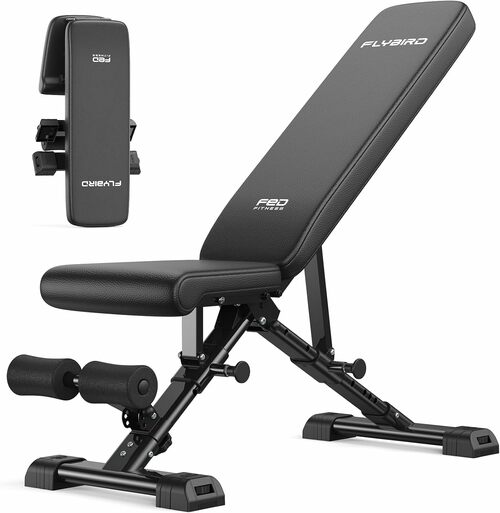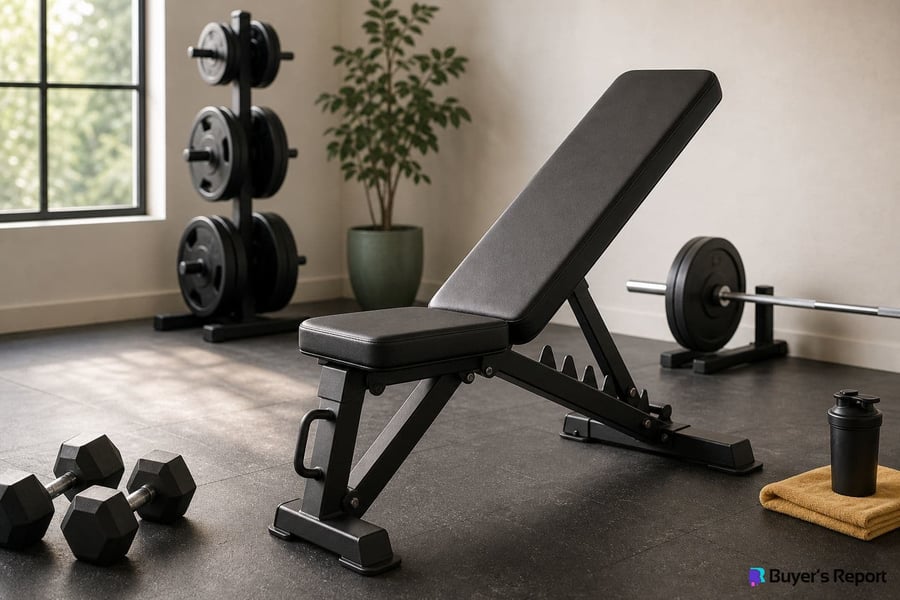
A weight bench is the foundation of almost every serious home gym — it's the platform that unlocks pressing, rowing, and isolation work that floor training simply can't replicate. But with flat benches, fully adjustable models, and compact folding designs all competing for your space and budget, choosing the wrong type means either limiting your exercise variety or buying more bench than your setup actually needs. This guide cuts through the noise by focusing on the specs and features that genuinely affect your training — bench type, weight capacity, pad quality, and whether it will fit your rack — so you can make a confident purchase from day one.
Who Is This For?
A weight bench is worth the investment any time floor-based work starts holding you back, but the right type depends almost entirely on how you train and how much space you have. Before browsing options, it helps to identify which category of lifter you are.
- Home gym beginners benefit most from a solid adjustable or FID bench, giving them enough exercise variety to progress without needing multiple pieces of equipment. A reliable mid-range bench at a sensible weight capacity is all most beginners need to build a complete training foundation — though a bench on its own isn't a substitute for a well-structured program or qualified coaching when you're learning the lifts.
- Barbell pressers and powerlifters should prioritise a flat or low-incline bench with a heavy-gauge steel frame and rack-compatible dimensions over a bench loaded with adjustment settings they won't use. Stability and a firm, correctly-sized pad matter far more than versatility for this group.
- Hypertrophy-focused lifters doing a lot of dumbbell work across multiple angles will get the most value from an adjustable or FID bench that offers a wide range of incline and decline positions. Multi-angle training is a core part of most muscle-building programming, and a bench that locks you into one position will limit that.
- Small-space and apartment users should treat footprint and storage as primary filters, not afterthoughts. A folding bench that stores vertically can free up several square feet, and that difference is significant when a spare room doubles as a gym.
- Multi-user households need to pay close attention to weight capacity, since the rated limit must account for the heaviest user's bodyweight plus the heaviest planned load — not just one or the other.
Types of Weight Benches
The bench market breaks down into five main variants, and each one reflects a genuine trade-off between stability, versatility, and footprint. Knowing what each type gives up — not just what it offers — is the fastest way to find your fit.
- Flat bench is a fixed horizontal pad with no adjustment mechanism, which makes it the most structurally rigid and stable option available. It excels at barbell bench pressing and heavy dumbbell work, but can't be repositioned for incline or seated exercises. Best suited to lifters whose programming centres on flat-press movements.
- Adjustable / incline bench adds multiple incline positions — and sometimes a seated upright angle — without the complexity or cost of a full FID design. This is the sweet spot for most home gym users who want variety without paying for a decline function they rarely need.
- FID bench (flat-incline-decline) covers the full range of angles and is the most versatile option in the category. The trade-off to watch for is the pad gap — the space created near the hip when the pad splits for decline — which can be uncomfortable during certain movements, so check pad design carefully.
- Folding / compact bench prioritises storage above all else, folding to a slim vertical or horizontal profile that fits in a closet or against a wall. These benches involve structural trade-offs at the folding joints, so weight capacity and rigidity under load deserve extra scrutiny on compact models.
- Utility / preacher bench is either a standalone purpose-built piece or a modular attachment for existing benches, designed specifically for arm isolation work. It's rarely a first purchase but adds meaningful value for lifters who want targeted bicep and tricep development.
Weight Capacity and Frame Construction
Weight capacity is the single most safety-critical specification on a bench, and it's frequently misunderstood. Always verify the bench's rated weight capacity covers your combined bodyweight and the heaviest load you intend to lift, with a meaningful safety margin — many lifters underestimate this number, especially as they progress.
- How to calculate your number is straightforward: add your bodyweight to the maximum combined weight you plan to lift (barbell plus plates, or dumbbell pair), then look for a bench rated well above that total — a 20–30% cushion is a reasonable starting point. If you weigh 90 kg and plan to press 100 kg, you're looking for a bench rated for at least 230–250 kg, not just 190 kg.
- Steel gauge and rigidity are your structural integrity signals when you can't see the welds directly. Lower gauge numbers mean thicker steel — 11- or 12-gauge frames flex significantly less under heavy load than 14- or 16-gauge alternatives. A bench that wobbles or creaks at moderate weights will only worsen over time.
- Capacity ratings vary by manufacturer and are not standardised across the industry, so a "500 lb" rating on one bench doesn't translate directly to the same number on another. Always check the individual spec sheet to see whether the figure includes user bodyweight or refers to load only, and read the fine print before assuming two benches are comparable.
Rack Compatibility and Bench Dimensions
If you're pairing your bench with a squat rack or power cage, dimensions are a purchase-critical check — not an afterthought. A bench that doesn't fit your rack correctly forces awkward unracking angles and creates real safety problems, so measure before you buy.
- Pad height should ideally land between 17 and 17.5 inches from floor to pad surface for bench pressing. This height lets most lifters place their feet flat on the floor, which provides the stable base you need for safe, effective pressing.
- Bench width must be narrow enough to pass between your rack's uprights while leaving enough clearance for safe bar movement. Most standard benches fall within 10–12 inches of pad width, but wider padded designs can conflict with narrower cages — measure your rack's internal width before buying.
- Overall bench length affects whether your head is correctly positioned under the bar at the start of a lift. Too short and you're shuffling awkwardly; too long and the bench legs may clash with the rack's base frame. Check that the bench will sit cleanly inside your specific rack's footprint.
Key Features to Look For
Once you've settled on a bench type and confirmed it fits your rack and capacity needs, these features separate a bench that holds up over years of use from one that disappoints within months.
- Pad thickness and firmness should combine at least 2 inches of high-density foam with a firmness level that supports heavy loads without bottoming out. An overly soft pad compresses under bodyweight alone, creating an unstable surface that affects both technique and safety.
- Adjustment mechanism type determines how quickly and reliably you can change angles between sets. Ladder-style (also called ratchet) systems are generally more durable and stay locked under load; pop-pin mechanisms are faster to adjust but can develop slop over time, so check the quality of the pin and socket before buying.
- Footprint and storage matter whether or not space is your primary concern. Even in a dedicated gym room, a bench that stores flat against a wall frees up floor area for other movements between sessions, and folding benches have improved in rigidity considerably in recent years.
- Upholstery durability is easy to overlook but important for longevity. Vinyl coverings vary significantly in quality — look for double-stitched seams and tear-resistant material, especially on benches that will see daily use or multiple users. A cracked or peeling pad is an annoyance at best and a hygiene issue at worst.
- Leg and base design should include rubber feet or non-slip end caps to prevent the bench from sliding on hard flooring under load. A wide, stable base stance is especially important on FID and folding models, where the adjustment mechanism introduces more potential flex points than a simple flat bench frame.
Safety Checks Before and During Use
Weight benches are mechanical structures that bear significant combined loads, and a handful of habits will keep yours safe across years of training. Inspect all bolts, welds, and adjustment mechanisms before each use and re-tighten fasteners regularly — a loose bolt that goes unnoticed for weeks is how small problems become serious ones. Follow the manufacturer's assembly instructions exactly when you first put the bench together; improper assembly can cause structural failure under load. Use the bench only on a stable, level, non-slip surface, and a spotter is strongly recommended when lifting heavy barbells, especially on decline angles where bailing safely is harder.
On the spec sheet itself, confirm the following before buying:
- Weight capacity documentation should clearly state whether the rated limit includes user bodyweight and load combined, or load alone. If the listing is ambiguous, contact the retailer for clarification — this number is too important to assume.
- Weld quality indicators to look for in product imagery include smooth, continuous welds at all frame joints rather than spot welds, which are more likely to fail under repeated heavy loading over time.
- Adjustment lock security on incline and FID benches should be verifiable before purchase. Look for user reviews or product details confirming that the locking mechanism holds position firmly under load and doesn't shift or slip mid-set.
- Non-slip feet confirmation should appear in the spec sheet or product description. Rubber feet or anti-slip end caps are a basic but essential safety feature that not every bench includes as standard.
Bottom Line
The best weight bench for you is the one that matches how you actually train, fits the space you have, and handles the loads you plan to lift — with room to grow. Beginners and most recreational lifters will be well served by a quality adjustable bench at a sensible weight capacity; serious barbell pressers should chase stability and rack compatibility above all else; and anyone tight on space should treat foldability as a first-order filter. Whichever direction you go, prioritise frame quality and pad construction over feature count — a simple, solid bench will outlast and outperform a wobbly one loaded with angles you never use. Progress from any training program varies by individual effort, consistency, and overall lifestyle, but a well-chosen bench gives you a dependable platform to build on for years.

 FLYBIRD
 Finer Form
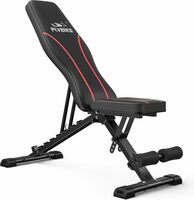 FLYBIRD
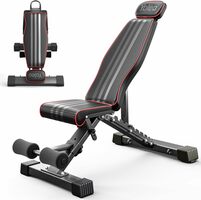 Yoleo
Yoleo
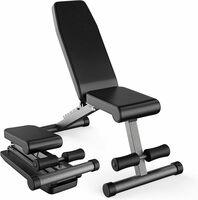 Finer Form